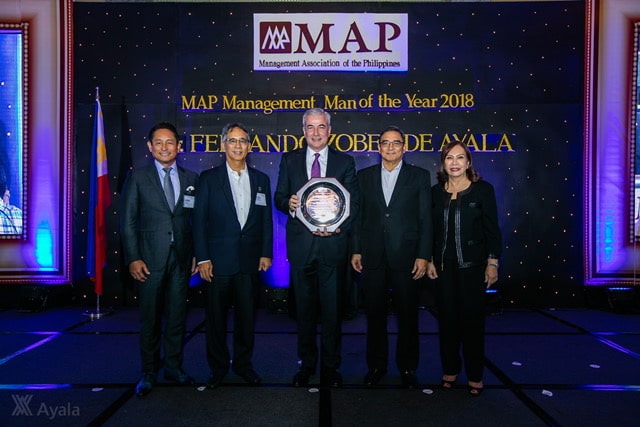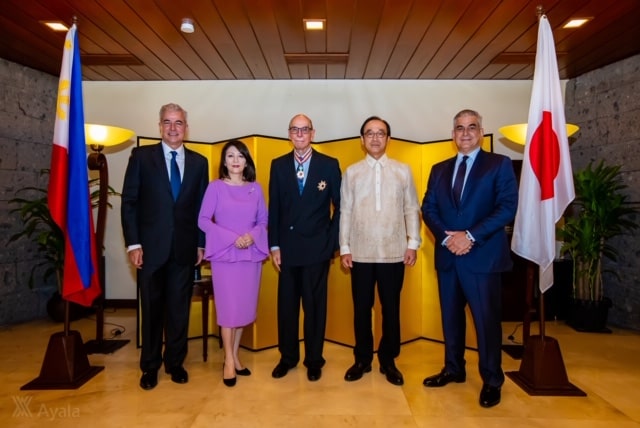

Fernando Zobel de Ayala, MAP Management Man of the Year 2018

FZA-MAP-Management-Man-of-the-Year-2018

In photo (L-R):
MVP Group of Companies Managing Director – Media Bureau and Philex Mining Corp. SVP for Public and Regulatory Affairs, Atty. Michael Toledo,  MAP MMY Judging Committee Chair, Aurelio Montinola, AC President & COO and MAP Management Man of the Year 2018, Fernando Zobel de Ayala,  MAP President, Ramoncito Fernandez and MAP MMY Search Committee Chair, Marife Zamora.

Harnessing the Potentials of Today towards a Future-Ready Philippines


To the Board of Governors of the Management Association of the Philippines,

Fellow members of MAP,

Ladies and gentlemen,

Good afternoon. Let me first thank all those involved in making this event and recognition possible. Thank you to the MAP Board of Governors led by Mon Fernandez, the MAP Management Man of the Year Judging and Search Committees led by Gigi Montinola, Ed Chua, Marife Zamora, and Perry Pe. 

I also extend a very special thanks to the individuals who have so kindly nominated me for this honor: Amb. Albert Del Rosario, Lilia De Lima, Tony Aquino, and Jess Estanislao, as well as the many others behind the scenes who were involved in the nomination process. Let me also take this opportunity to congratulate the incoming Board of Governors, and your incoming President, Riza Mantaring.

Allow me to also acknowledge representatives from the senior management of Ayala present today. My brother Jaime and I often discuss how privileged we are to be able to work with these exceptional individuals. They are passionate about our country and share our desire to bring the Philippines to the highest stage of development within the community of nations.

I would also like to express my warmest appreciation to the many friends, partners, and customers of the Ayala group of companies. Our group’s stability and success would not have been possible without your continued trust, and we are very thankful for your faith in us throughout the years. Let me also acknowledge a good friend of our family, Mr. Fred Borromeo, who joined MAP in 1954, and at 92 years old is certainly the wisest MAP member in the room. Last but certainly not the least, I would like to thank the members of my family present today—my parents, my wife Kit and siblings, spouses and friends. We owe so much to my father, who took a risk and entrusted the leadership of Ayala to Jaime and I at a fairly young age. He had already set high standards of professionalism in the company and a deep sense of commitment to the developmental goals of the country. Jaime and I had a great platform to build from. 

I am deeply honored to receive this recognition, and greatly humbled to join the company of such an illustrious group of individuals—many of whom I have admired and respected, and have had many fond memories with as friends, business partners, and mentors. We are also deeply honored as a family that I am now the third member of the family, after my father and brother, to be recognized for this award. 

MAP’s overarching theme for 2018 is “Competing in the Age of Disruption.” As I was reflecting on the many achievements of our esteemed previous awardees, as well as MAP’s enduring work in advancing the management profession in the country,

I realize that this theme remains relevant and resonant, regardless of the period. In every timeframe in our history, we have had to deal with disruptions on various fronts. These challenge us to continuously find ways to put our organizations—and our country through our collective contributions—on a clear path to shared prosperity. 

We live in a world that is very volatile, uncertain, complex, and ambiguous. But while current developments appear bleak, today’s dynamic times have likewise given birth to impressive advances and amazing possibilities. We live in an era where technological innovation, new business models, and new ways of thinking can be used to benefit a larger number of our population. 

This is the notion that I would like to put forward today—that the ingredients to bring the country to the next level are already within our grasp. MAP and our individual organizations carry the challenge and responsibility to properly harness the potentials of today and use them to create a progressive, equitable, and Future-Ready Philippines. 

Our journey towards future-readiness requires a strong platform from where we can launch ourselves. I believe that we have already been building this over the last few years. I refer to our macroeconomic foundations, and our highly talented and committed human capital. 

On the former, I think we would all agree that we have had a unique period of continued economic growth that has transformed our country. This growth has largely been consumer-led, supported by strong overseas remittances, the growing BPO and services sector, and complemented by increasing investments. I would also like to emphasize the enormous role that local private capital from many of the companies represented here today has played in the growth of our economy. 

We also see many positive developments with our people, whose median age is 24 and where a third of the total population are millennials. We are also seeing a continuing influx of young and talented Filipinos who have studied and trained overseas. These young Filipino professionals not only possess excellent technical skills, but are also technologically adept, and more importantly, have the ideals and innate passion to contribute to national development. They are also prepared to take on significant managerial responsibilities at a much younger age than we may have been used to in the past. 

The challenge we all now face as a business community is to determine where we want our country to be in the next 10, 20 and 30 years. There are many areas where the private sector is focusing its efforts. From our point of view in Ayala, we have decided that four areas hold tremendous potential to make a lasting and meaningful impact as we build a Future-Ready Philippines. These sectors are: inclusive finance, education, healthcare, and sustainable tourism. 

Let me start with financial inclusion. It is unacceptable that only 23% of Filipinos are part of the banking system. The rest are exposed to unauthorized lenders charging exorbitant rates and face the risks of the unofficial economy.

We are doing our part through banking channels and mobile solutions. BPI formed BanKo a few years ago to serve micro, small, and medium enterprises with their lending requirements. We further recognize that mobile technology has likewise provided a unique opportunity to serve the financial needs of a broad segment of our people. Through one’s mobile device, there are now several solutions available for payments and mobile wallets, digital lending, plus wealth management and credit analytics. Our partnership with Ant Financial, a subsidiary of Alibaba, has brought forth an enormous amount of knowledge in the fintech and mobile space, given the cutting edge technology that China has been deploying for their population. While the Philippines is still far from having fintech as ubiquitous as it is in China, together with Ant Financial, we are excited to further develop our fintech industry to reach our financially underserved countrymen. Ensuring the success of our financial inclusion efforts through mobile technology, however, requires massive investments in telecom infrastructure. The telcos have been spending record amounts to keep up with the exponential demand for more data and faster connections.

Let me now shift to education. McKinsey estimates that up to 15% of the global labor force, or 375 million workers, will have to switch jobs by 2030. As certain professions are rendered irrelevant, new opportunities will emerge. However, this will require the right type of training in 21st Century skills and values. 

On a more basic level, we must immediately tackle the serious condition we face in many of our schools, wherein 3.6 million Filipino youths find themselves out-of-school. Even more stunning are the findings of the Philippine National Employability Report, published in 2017 by employability assessment firm, Aspiring Minds. From their survey of 60,000 fresh graduates from 80 tertiary level institutions, they found that 65% of Filipino graduates lacked the appropriate skills and were thus unemployable in their sector of choice.

Our educational system is in serious need of help and it is very encouraging that the private sector has been contributing in a significant way. In our own case, our solutions revolve around some of the key problems that we have had to address through our schools. These include a huge reduction in dropout rates; increasing the employability of our students; and producing competent teachers to sustain education reform. At the basic education level, through CENTEX and APEC Schools, we have changed the way students are taught with a curriculum that focuses on practical skills and innovative teaching methods. Through close coordination with the needs of industry, we were also able to design programs where recent graduates are employed within 90 days and receive starting salaries that are significantly higher than the average. At the teacher level, we are delighted that through our partnership with the National Teachers College, we now havean opportunity to equip our teachers with the necessary skills to drastically improve the quality of instruction in the country.

Aside from our students, we also need to give the workforce an opportunity to upskill and retrain themselves. A number of online digital learning solutions are readily accessible with content from the world’s top universities offering customized training programs, suited to the individual’s needs, and at a very modest cost. We have recently launched Ayala University, a digital learning platform that brings together carefully selected online global content from the best schools to upskill our employees at an exponential scale. 

The third sector I want to highlight is healthcare. I strongly believe that the next critical need for the country is a ramp up in affordable, quality healthcare. How can we possibly have a productive workforce and a higher quality of life for our people without proper healthcare? Our research is staggering: 43% of low to middle income Filipinos have not seen a doctor in more than a year, with 6 out of 10 Filipinos dying without even seeing a doctor. The Economist ranked the Philippines 78th out of 80 countries in an index that measures the quality and availability of the country’s palliative care environment, which includes hospices, nursing homes, and professionals. 

The Filipino patient deserves better—from birth to end-of-life. At Ayala, we strongly believe that healthcare is a fundamental right for all. This principle has shaped our approach to our healthcare business. Our focus has been to find disruptive models and technologies that make healthcare products and services more accessible and affordable to a broader segment of the population. A critical part of this offering is a strong emphasis on preventive healthcare, which we believe will significantly impact health outcomes and our stakeholders’ disposable incomes. This is essential as the World Health Organization reports that lifestyle-related diseases, such as diabetes and hypertension, account for as much as 70% of deaths worldwide—deaths that are easily preventable if there is a focus on proactive and preventive medicine. Towards this end, we continue to grow our FamilyDoc clinical network to expand the reach of primary care to more Filipinos. Meanwhile, through our investment in Generika drugstore, we are expanding the reach of generic medicines to help provide affordable options for preventive healthcare. We view this as a key component to democratize healthcare and promote disease prevention, as our research shows that generic medicines can be cheaper by up to 85% compared to their branded equivalents. The elements to substantially improve the state of our healthcare are within our grasp. We have excellent healthcare professionals, a plethora of health technologies are available, and favorable regulation, through the Universal Healthcare Act, exist. Let us not let this opportunity pass us by. Let us boost our efforts at giving our people the healthcare that they deserve. Lastly, let me focus on tourism. I believe it is time to dramatically focus on tourism as an industry that can have an enormous impact to our country. To illustrate the magnitude of its effects, consider Thailand that attracted close to 35 million visitors last year. According to the World Travel and TourismCouncil, tourism directly contributed close to 10% to Thai GDP in 2017. 

I feel that we have yet to adequately embrace tourism as a valuable component of our development. While tourism continues to contribute much to the economy, there remains significant value to be unlocked. I say this because while we invest only $1.9 billion for tourism—which is close to last in ASEAN and below the global average—our numbers are steadily increasing. For instance, international arrivals grew from 2.8 million in 2006 to a record 6.6 million in 2017. Tourism’s direct economic impact has also more than doubled over the last 10 years, accounting for 8.7% of GDP and 2.3 million jobs. The World Travel and Tourism Council forecasts that by 2028, tourism could directly account for P2.5 trillion, close to 10% of GDP, and support 3.2 million jobs. If we are to make a quantum leap in tourism, we need to involve many more partners, have a far more holistic and visitor-centric masterplan, and be more aggressive and strategic in deploying capital. I believe that this is where the Philippines can differentiate itself from our neighbors. Too many Asian countries have developed their tourism sectors too quickly, and in the process, have severely damaged their ecosystems. It is wonderful to hear that the tourism agenda currently being discussed under Secretary Berna Romulo Puyat is one that strongly includes environmental protection and sustainability. To support this drive, we must create the appropriate governance structures to ensure that there is proper planning and project execution inour best tourism sites. This includes ensuring a seamless and 
exceptional visitor experience—from arrival at the airport, to transportation to hotels, and to the overall experience at the destination. Let me also emphasize the need for strong visitor impact management—that is that we properly manage what practitioners call as carrying capacity and limits of acceptable change or put simply, the maximum number of visitors and degree of impact that any single destination can take and withstand. 

From our point of view, we have moved into substantial tracts of land and are looking for more in the hope that we can create several sustainable tourism environments. In all our tourism developments, we want to make sure that the employment benefits to the local communities are maximized, environmental impact is properly managed, and that these destinations can serve as a showcase for the rest of the world on how tourism’s potentials can and should be harnessed. The multiplier effects of tourism and the impact that it can have on communities—especially the poor—is enormous. As the Ayala group enters its 185th year in 2019, we are more committed than ever, along with the rest of the business community, to continue building our growth platforms for our country, and to ensure that Filipinos have the skills necessary to take advantage of these opportunities. 

It is interesting that as far back as 1962, John F. Kennedy was already anticipating the same challenge and responsibility that the world continues to face today. He stated in a speech and I quote, “if men have the talent to invent new machines that put men out of work, then they have the talent to put those men back to work.” Generating new jobs for the next generation and providing opportunities for value creation will be our utmost priority. This, however, requires a comprehensive response from the private sector and the full support of government. Like many of you, I am a great believer in the critical role that the business community plays in nation-building. Today’s disrupted times, while alarming on many instances gives us access to several resources: capital is accessible for new ventures; new technologies and business models are available to be harnessed; and there is a wealth of talent among our people waiting to be unleashed. 

Through MAP and the other business organizations in the country, the private sector can accelerate efforts to build a progressive, inclusive, dynamic, and Future-Ready Philippines that we can all be proud of. With a unified public and private sector; an appropriate plan designed for the medium and long term; and a consistent vision that will keep us on track through political cycles, we can certainly direct our country on an irreversible path towards equitable and sustainable progress. 

Once again, good afternoon, and thank you very much for this great honor. 

Ayala Group Listings Comprise 20% of Philippine Bond Market

December 11, 2018 – This year, the Ayala group of companies has listed PHP 203.13 billion worth of bonds, making up about 20% of Philippine bond market today. Last December 7, 2018, BPI reported to have listed PHP 25 billion—the largest single bond issue ever to be listed
in the Philippine Dealing & Exchange Corp. (PDEx), bringing the total local peso bond market to the trillion-peso level.


“Today’s trillion-peso bond market is the result of many factors — a vibrant economy, an
innovative private sector, and a commitment by the government sector to enhance the
enabling environment,” shared Ephyro Luis Amatong, Commissioner of the Securities and
Exchange Commission (SEC).


According to PDEx, the Ayala group has been a pioneer in the Issuer Community since the
exchange started in 2008, when Ayala Corporation and Ayala Land listed a combined total of
PHP 10 billion.


Since then, the Ayala group has consistently tapped the debt market to support the aggressive
growth strategy of its various businesses in real estate, banking, telecommunications, water,
and power.


Over the last five years alone, Ayala has invested a cumulative groupwide total of PHP 748.3
billion in capital expenditures to fund investments largely in Ayala Land and Globe Telecom,
including new ventures in energy, industrial technologies, infrastructure, healthcare, and
education.


Ayala Corporation Chairman & CEO Jaime Augusto Zobel de Ayala strongly believes that the
Philippine economy is ripe for investments.


“Ayala has been a beneficiary of the country’s significant economic growth. This has served
as a catalyst for us to unlock many opportunities and push us to develop new ideas to incubate
new businesses, and to explore prospects for disruptive innovation,” Zobel said.


Contact Information
Ayala Corporation
May Florentino
Corporate Communications
Email: florentino.mpp@ayala.com.ph

Ayala Chairman Emeritus Jaime Zobel de Ayala Attends Celebratory Lunch at Japanese Ambassador’s Residence

Makati, Philippines – December 5, 2018 Following the conferment of The Order of the Rising Sun, Gold and Silver Star last April 29, 2018 by the Government of Japan, Ayala Corporation (AC) Chairman Emeritus Jaime Zobel de Ayala paid a visit to the Japanese Ambassador’s residence in Forbes Park. He was accompanied by sons AC Chairman & CEO Jaime Augusto Zobel de Ayala and AC President & COO Fernando Zobel de Ayala, as well as AC Head of Corporate Support Services Ambassador Marciano A. Paynor, Jr., and AC Group Head of Public Affairs Jose Rene Gregory D. Almendras. He was received by Japanese Ambassador to the Philippines His Excellency Koji Haneda.

During the celebratory lunch, Zobel and party were treated to a Japanese meal with a Filipino twist. Zobel and Ambassador Haneda then gave toasts to commemorate the occasion and the prestigious honor. The Order of the Rising Sun is one of the highest distinctions bestowed by the Japanese government on a civilian.

Zobel’s leadership in AC, the oldest major conglomerate in the Philippines spanning a diverse range of businesses in real estate, banking, telecommunications, water, power, industrial technologies, infrastructure, healthcare and education has enabled many successful business partnerships with the Japanese, and has helped AC to promote a greater appreciation for Japanese culture through several Japanese-related exhibitions. Ultimately, Zobel’s contribution has helped to strengthen the economic and cultural bond between Japan and the Philippines over the course of his esteemed career.

Celebratory-Lunch-Japanese-Ambassador-Residence
In photo (L-R): AC President & COO Fernando Zobel de Ayala, Madame Ihoko Haneda,
AC Chairman Emeritus Jaime Zobel de Ayala, Japanese Ambassador to the Philippines,
His Excellency Koji Haneda and AC Chairman & CEO Jaime Augusto Zobel de Ayala

Project Kasibulan, now on its third year

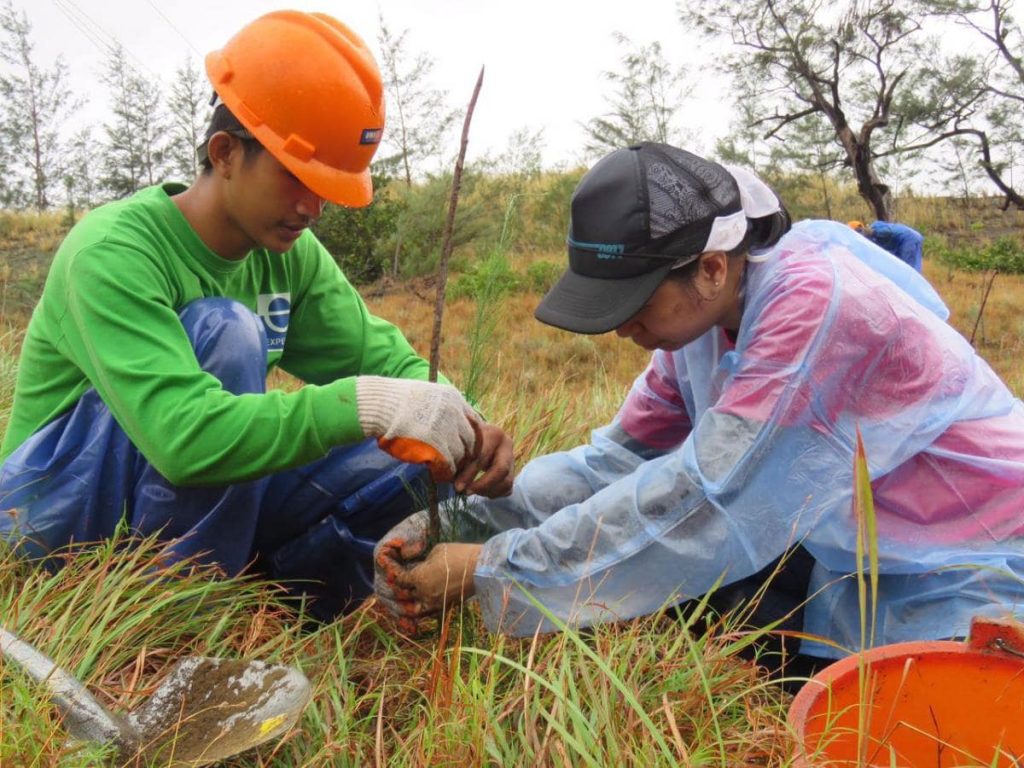
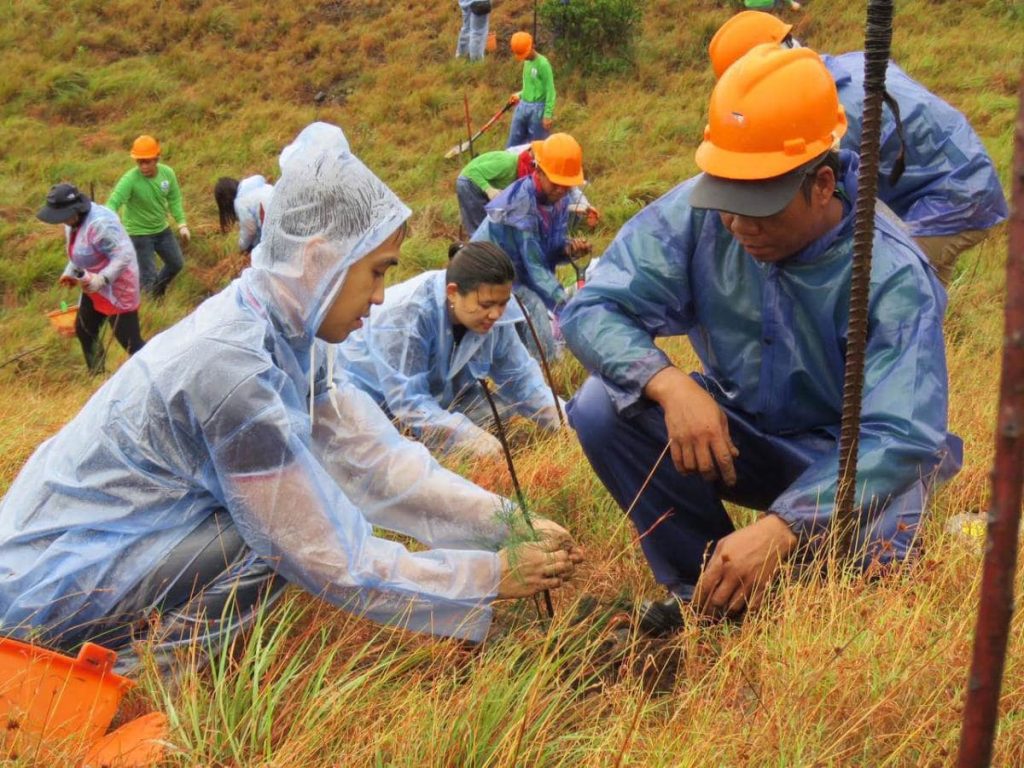
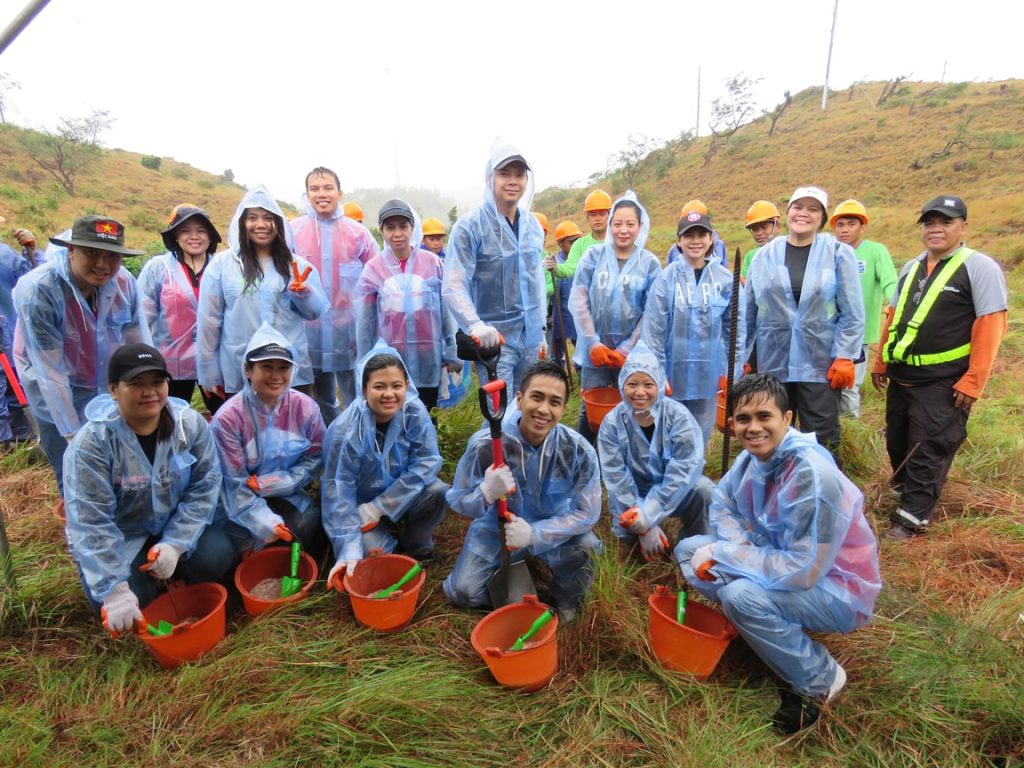
Ayala’s group-wide, nation-wide reforestation and forest protection program called Project Kasibulan continues this year with its first batch of volunteers who planted at North Luzon Renewables (NLR) in Pagudpud. The group is composed of heads and representatives who are part of the Enterprise Risk Management Council across the Ayala Group.

Last November 22, they were immersed in the proper end-to-end planting strategy applied in NLR, including how seedlings are grown and cared for. They also met the communities that the organization is in partner with to see how the efforts contribute in improving the lives of the locals.

Despite the rainy weather the following day, the group pursued planting. To date, the total number of seedlings planted is 3,851, covering an average of 2.4 hectares.

In December 2018, another batch will be opened to employees who wish to make a difference. If interested, please contact your company’s Sustainability Officer.

Project-Kasibulan-now-on-its-third-year

Project-Kasibulan-now-on-its-third-year

Project-Kasibulan-now-on-its-third-year

Technology-Driven Logistics for The Digital World

AC Infrastructure and the Global Fashion Group Team Up to Transform Logistics

E-commerce and digital payment platforms are changing the way people purchase goods. These ecosystems give small, medium, and large-scale businesses a space to innovate services for new markets and grow at a faster pace. As the digital economy expands, traditional logistics infrastructure and systems is also undergoing a similar digital transformation to meet the needs of this growing marketplace.
Ayala Corporation, through its wholly-owned subsidiary AC Infrastructure Holdings Corporation (AC Infra), has partnered with Brillant 1257 GmbH & Co. Vierte Verwaltungs Kg, a subsidiary of the Global Fashion Group, the leading online fashion destination for growth markets, to form a technology-driven end-to-end fulfillment solutions company. The joint venture company, Entrego Fulfillment Solutions Inc. (Entrego), is 60% owned by AC Infra and 40% owned by Brillant.
Entrego draws from its strong competence and track record in e-commerce fulfillment solutions, having started in 2013 as ZALORA Philippine’s logistics division. The company takes its name from the Spanish word entregar, which means “to deliver”. “Entrego” literally translates to “he delivered”, which aptly captures the company’s ultimate objective of fulfilling its commitment to its clients.
Entrego intends to build on its expertise in e-commerce logistics and fulfillment solutions and offers an integrated suite of fulfillment services including management of parcel, document and bulky deliveries for B2B and B2C customers.
AC Infra has so far committed 580 Million pesos to grow Entrego into a significant technology-driven fulfilment solutions provider in the Philippines.
Ayala Corporation Chairman and CEO Jaime Augusto Zobel de Ayala sees benefits for the Ayala group with Entrego. He shares “Our business units overlap on several fronts and managing their supply chain and their fulfillment services needs to its customers is one such front where we see Entrego adding value.”
He adds that Ayala’s entry into the fulfillment space “unlocks opportunities for its real estate, banking, telecom, health, automotive, and industrial manufacturing businesses and paves the way for new business models.”
Emerging opportunities for Ayala, as well as the growth of many SMEs, are anchored on having a highly-efficient, reliable, and inexpensive platform to move goods across the archipelago. Entrego is well positioned to meet these expectations with its 45 hubs as of October 2018 covering over 1,500 cities and municipalities all over the Philippines. Since starting operations, Entrego is averaging a 99% on-time delivery rate nationwide, and even
reaches 100% on-time delivery in certain areas.
Patrick Schmidt, co-CEO of Global Fashion Group shared, “We are proud of how the synergy between Ayala and ZALORA Philippines has created a new retail environment that benefits the Filipino consumer and with Entrego, we hope to deliver a positive impact on the country’s fulfilment sector by using technology and data as the main driver. This will unlock huge opportunities for e-commerce and brands in the Philippines.”


Technology-Driven Logistics for a Digital Economy

“We are applying technology to transform the logistics ecosystem. Our intent is to innovate and organize services to achieve better operating and cost efficiencies for the various customers we have, whether large, medium, or small-scale companies,” shared AC Infra CEO and Chairman of the Board of Entrego Rene D. Almendras.
Entrego helps businesses manage their B2C and B2B fulfillment needs by providing customized end-to-end solutions. Its technology backbone enables real-time tracking of shipments, providing clients visibility and peace of mind that goods get to their destination. Entrego’s data-driven approach allows it to provide value-added services and detailed performance analytics, providing business managers valuable decision-making tools.
“With our technology-driven fulfillment solutions, our mission is to enable businesses to grow and allow them to focus on their core competencies by taking on the burden of logistics: that of getting goods from origin to destination economically and efficiently, with more visibility in the supply chain, and better customer experience,” said Entrego’s President Constantin Robertz.
To further support its investment in Entrego, AC Infrastructure will also be building a state-of-the-art e-commerce center to support back office operations. This facility can support the fulfillment of more than 100,000 orders daily when fully operational by the second half of 2019.


Empowering Businesses is Our Fulfillment

Entrego’s technology aims to level the playing field for small, medium, and large-scale enterprises across a broad spectrum of industries and sectors.
Through its ecosystem of relationships with different players in the logistics industry and driven by a dynamic team, Entrego puts itself in a unique position to scale rapidly, move with agility, and respond effectively to the evolving needs of its clients.
From you to there, Entrego delivers.

ENTREGO-Media-Briefing-October-22-2018

(In photo, L-R)

Rene D. Almendras, AC Infra CEO and Chairman of the Board of Entrego
Constantin Robertz, President of Entrego

###


AC Infrastructure Holdings Corp. (AC Infra) is the Ayala group’s wholly owned subsidiary that pursues projects to support the growing infrastructure needs of the public and private sectors. AC Infra meets the country’s urgent needs for efficient, reliable, safe, and sustainable modes of mass transportation, transport services, and fulfilment solutions services.

For further inquiries, contact:
Ken Lerona
Head for Marketing and CSR, Entrego
ken.lerona@entrego.com.ph
Joseph Anthony M. Quesada
Corp. Comm. and Sustainability Manager, AC Infra
quesada.jam@acinfra.com.ph
May Florentino
Senior Manager, Corporate Communications
Ayala Corporation
florentino.mpp@ayala.com.ph

Ayala Chairman & CEO Jaime Augusto Zobel de Ayala Joins GRI Sustainability Summit

JAIME AUGUSTO ZOBEL DE AYALA
GRI SUSTAINABILITY SUMMIT
PANEL: INDUSTRY PERSPECTIVE: PHILIPPINE BUSINESS PAVING THE PATH TO A SUSTAINABLE PHILIPPINES
OPENING STATEMENT
Monday, 08 October 2018 | Conrad Hotel


Good morning to everyone.


I congratulate GRI for organizing this summit and bringing together members of the private sector to push the topic of sustainability to the spotlight.
Let me start by thanking Tessie and Hans Sy of the SM Group for organizing this gathering. Sunny Verghese of Olam for being an extra ordinary entrepreneur and global citizen. His eloquent views on sustainability and it’s imperative for us in this day and age always inspire me. Also, a thank you to Bobby de Ocampo, Tim Mohen, and the Australian Embassy for their support of this conference.
Today, let me touch on the Ayala group’s sustainability journey—the thinking behind our sustainability philosophy, the tangible ways we are progressing to support this thinking, and some of the challenges that we face along the way.
Ultimately, all of us have a responsibility to address and contribute to addressing global issues that move beyond our corporate and national interests.
Let me start with the thinking behind our sustainability philosophy. In recent years, we have seen how the significant progress in our economy has yet to materialize in the lives of a majority of Filipinos. We have always believed that in a developing economy like ours, businesses play an indispensable role in addressing some of the most pressing development challenges. This responsibility does not only lie with governments.
To remain relevant, to continue building trust with communities, businesses must contribute to society as a whole, and ensure the progressive development of the markets they serve. In our case, Ayala has a presence in diverse industries that touch on human lives—housing, water, telecommunications, financial services, transport, healthcare, and education. By integrating societal needs into our corporate strategies, we believe we can play a role in alleviating some of the development challenges our country faces today.
It has become clear to us that businesses cannot operate in a vacuum, linked only to the community by the investments they make and the profits they generate. The role of private enterprise goes beyond that.
In recent years, broader communities and stakeholders have increasingly demanded more from private enterprises as well. We need only look at the pockets of social tension that have arisen around the world in protest of the current status quo, characterized by inequity, lack of opportunity, and the failure of institutions such as governments and the capitalist system to foster a more equitable world.

This thinking has, over time, led us to broaden our products and services to bring about greater economic and social inclusivity. Our group has identified opportunities for disruption in sectors that are undergoing massive challenges in affordability, quality, and accessibility.
On a personal note, these ideas began to percolate in my mind after I left business school in the 1980s. While I continue to place great value on the education I received, at the time, it also occurred to me that a significant component of my studies was not necessarily relevant to the needs of the Philippines. I would later meet a number of thought leaders who would develop these ideas cohesively, including Harvard professor Kash Rangan, who spoke on business at the base of the pyramid and, Michael Porter, another Harvard professor who developed the thesis on “creating shared value” and over time formed a global following around this thinking, including ourselves at the Ayala group.
Michael Porter defines “shared value” as policies and operating practices that enhance a company’s competitiveness, while advancing the economic and social conditions in the community where it operates.
Our group has embraced this philosophy and are increasingly aligning our profit goals with the needs of the communities we interact with, which is the second point I want to make.
Our real estate, banking, telecommunications, and water businesses continue to expand their offerings to reach more Filipinos, in support of our sustainability agenda.
More recently, we entered sectors and employed innovative business models that allow us to help fill gaps and meet the real needs of Filipinos: retail pharmacies and community-based, primary care clinics to fill healthcare gaps; affordable and quality education to enhance employability; and power, infrastructure, and industrial technologies to help sustain our country’s economic growth.
Let me cite a few tangible examples from the Ayala group, starting with our water unit. Manila Water has a flagship program called Tubig Para sa Barangay that delivers affordable potable water specifically to low-income communities, including informal settlers. Many people said the model would not work, as informal communities would not pay for piped-in water. However, Manila Water developed a new business model that included flexible financing options, a socialized tariff scheme, and shared accountability among neighbors. We are happy to report that Manila Water has succeeded in getting more than 1.6 million people into the program with 100 percent collection efficiency in these communities. Participants in the program now enjoy savings on their water costs, a reduction in water-borne diseases in their areas, and an improvement in the overall sanitation conditions in their communities.
The second example I want to make is in our healthcare unit. AC Health developed an innovative chain of community-based primary care clinics called FamilyDOC. This platform offers the services of an outpatient doctor’s clinic, a diagnostic facility, and a pharmacy in a single space that minimizes costs for families without jeopardizing the quality of healthcare received. Locating in high-density areas allows FamilyDOC to maximize foot traffic and build a relationship with the community. In addition, its prepaid and reloadable “health cards” and membership programs allow patients in these low-income communities to maximize the healthcare services available.

As a final example, we have entered the education space through the Affordable Private Education Centers or APEC Schools, a chain of secondary schools that provide quality and affordable education with annual school fees within reach of middle to lower income households. APEC strives to enhance the employability of students through programs co-designed with partners in the private sector, and makes use of technology-enabled classrooms that help to build skills sought by employers. It does this by balancing costs, without sacrificing the quality of education that students receive.
However, from our experience in the Ayala group, developing businesses for low-income communities presents a few unique challenges, which is the third and final point I want to touch on. This segment has inherent characteristics that tend to raise the costs of doing business and, while many of these are common to any business, they are more acute as the incomes of the target segments fall.
As we evolved and adjusted our own business models to be far more inclusive in meeting the needs of a much broader consumer segment, we have identified three key challenges to operating within the base of the pyramid.
First is the operational challenge. There are implications of affordability and access during the initial entry into low-income consumer markets. For example, lower disposable incomes limit the amount of a product that can be purchased at any one time. This is why “parceling” or purchase-as-needed small amounts have become popular in emerging markets.
Second is the more fundamental culture challenge as corporate decision-makers do not typically come from the base of the pyramid, making them a step removed from the realities on the ground.
Finally, there lies the challenge of improving the overall framework for doing business, with uncertainties in regulation and enforcement of policies increasing the complexity of developing inclusive businesses.
From these experiences, the single most important take away from us is the need for businesses to be open to experimentation: to looking at business models from a new and innovative perspective.
Through innovative and creative business models, we have sought to achieve a balance between our financial aspirations and our broader sustainability and nation-building goals. As our group constantly strives to seek ways to integrate our sustainability philosophy into the core of our businesses, the United Nations Sustainable Development Goals provided much-needed structure and spurred a natural transition to anchor our own goals to this global framework.
We believe that the SDGs capture succinctly the responsibility that we all have for each other—our collective goals to end poverty, protect the planet, and ensure prosperity for all. For businesses, they outline key metrics that we can use to measure and drive the positive impact we have on society.

Furthermore, the SDGs served as essential guide in our adoption of the integrated report framework that captures our company’s financial results along with our environmental, social, and governance or ESG performance. We believe that transitioning to this annual reporting framework in addition to our adherence to GRI standards helps our stakeholders better understand our shared value creation process and its overall impact on society and our country.
While we believe that this is a core value at the heart of corporate culture that guides all our employees, we continue to look for ways to ensure that sustainability is fully embedded into our business strategy today and in the future. As a group, we are undergoing the process of developing concrete sustainability targets to monitor more accurately our contributions to the SDGs.
In closing, sustainability is increasingly gaining prominence at the heart of our strategy, as we strive to put the resources, knowledge, expertise, and talent we have towards meeting the real needs of Filipinos. Our determination to create shared value is what I hope will define the company today and in the coming years. This is not a function of altruism, but rather a strategic imperative. Businesses cannot survive in communities rife with inequity and in a degraded environment.
Ignoring the challenges faced by the world today threatens our ability to create long-term value and jeopardizes enterprises, markets, and entire societies.
At Ayala, we will continue to do our part to work better and innovate further to reach more Filipinos, improve lives, and contribute to addressing global issues that now extend well beyond our corporate and national boundaries.

GRI Sustainability Summit-JAZA-with-Sunny-Verghese
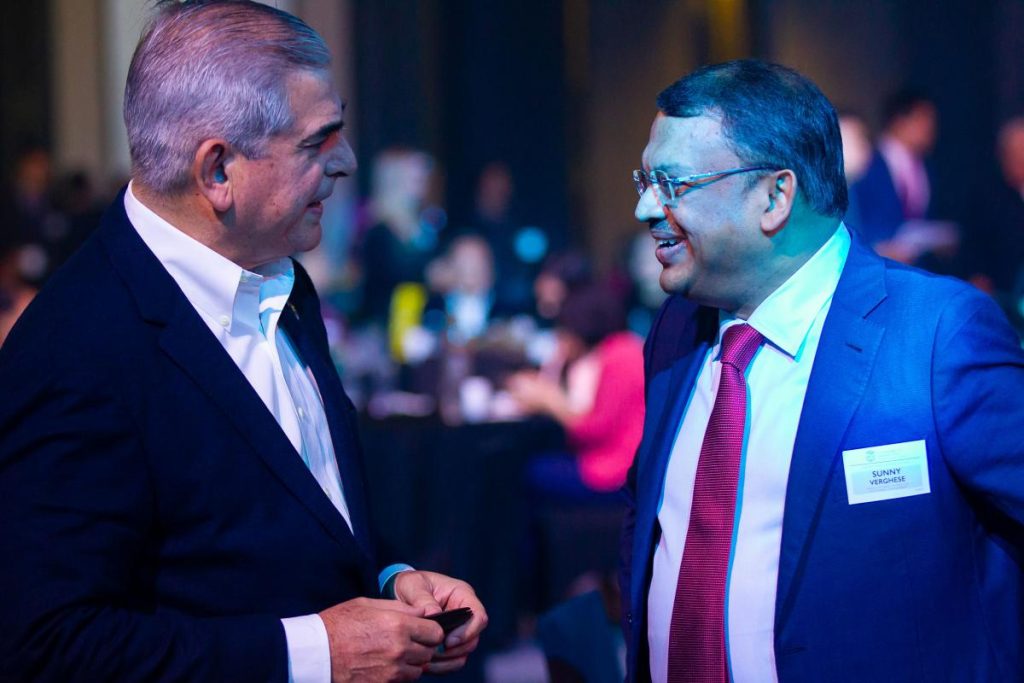
JAZA with Group CEO of global agri-business Olam International Limited and Chairman of the World Business Council for Sustainable Development Sunny Verghese
GRI Sustainability Summit-JAZA-with-Hans-Sy
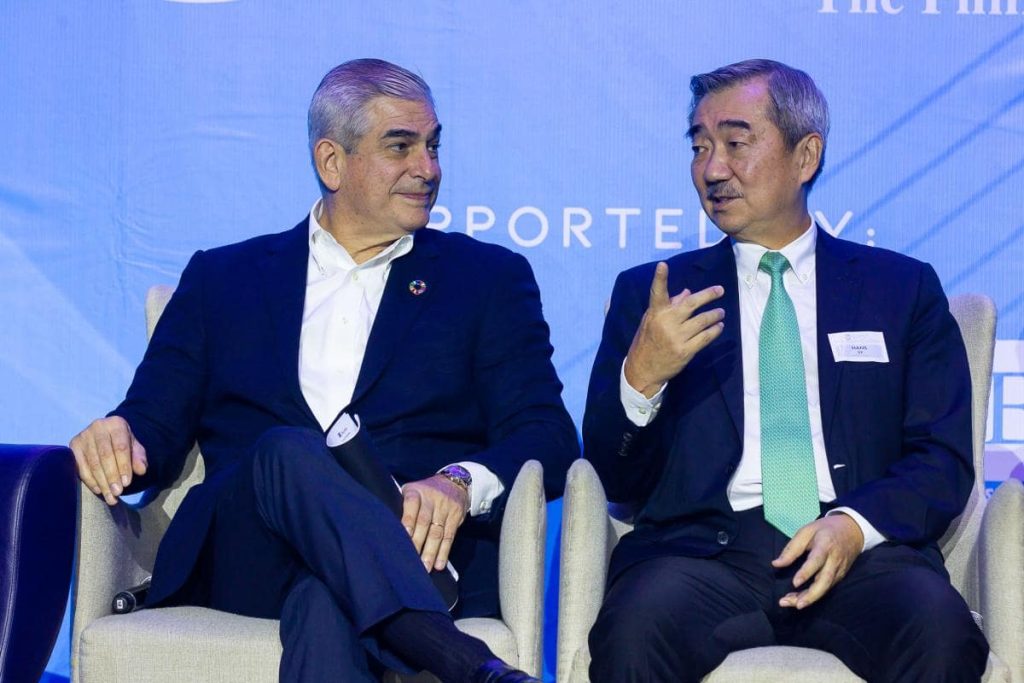
JAZA with SM Prime Holdings Inc’s former President and CEO Hans Sy
JAZA-GRI-Sustainability-Summit
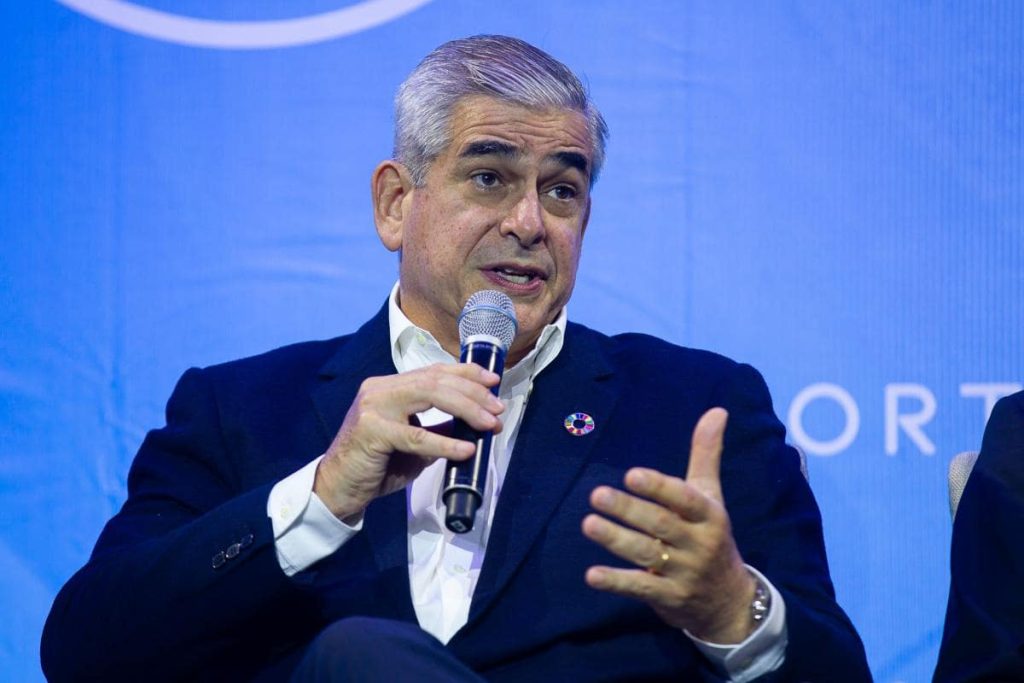
JAZA making a point at his panel: Industry Perspective – Philippine Business Paving the Path to a Sustainable Philippines

House of Investments and Ayala Announce Strategic Merger of Education Companies

MAKATI, Philippines – October 1, 2018 House of Investments Inc. (“HI”), HI’s education holding company iPeople, inc. (“iPeople”), Ayala Corporation (“AC”) and AC’s wholly-owned education subsidiary AC Education, Inc. (“AC Education”) signed the definitive agreements for the merger of AC Education with iPeople. The merger shall be subject to the approval of the stockholders of AC Education and iPeople, and securing the necessary regulatory approvals. Post-merger, listed iPeople shall be the surviving entity, with HI and AC controlling 51.3% and 33.5%, respectively. The transaction values the combined entity at approximately Php15.5 billion.
HI and AC will share governance and management of iPeople which, as a result of this strategic partnership, will become one of the leading education groups in the country, with almost 60,000 students.
The merger will bring together the 7 educational institutions of iPeople and AC Education, which together will offer quality education to students across all income segments, with campuses in Metro Manila, Calabarzon, the Bicol Region, and Mindanao. The merger will include iPeople and its significant subsidiary, Malayan Education System, Inc. (Operating under the name of Mapua University), one of the country’s leading engineering and technical universities, a world ranked QS-3 star university and the school with the most CHED Centers of Excellence in Engineering, and its subsidiaries, Malayan Colleges Laguna, the best board exam performing private higher education institution in Calabarzon, Malayan Colleges Mindanao in Davao, and Malayan Science High School in Manila. It will also include AC Education and its subsidiaries, the University of Nueva Caceres, one of the oldest and largest universities in Bicol, National Teachers College, the country’s pioneer private teachers’ training tertiary education institution, and APEC Schools, the largest chain of private stand-alone high schools in the country.
“We are looking forward to the merger of AC Education and iPeople. Mapua’s reputation as a leading private engineering and technical university in the country, together with AC Education’s tested ability to provide affordable quality education, leading to the employability of its graduates, would enable the Yuchengco-owned House of Investments and Ayala Corporation to jointly contribute, in a bigger scale, to the Philippines and all sectors of society. Together, our schools will not only aim at educating our youth but also at preparing our graduates to become major players in sustainable businesses driven by adaptive technology,” said Mrs. Helen Y. Dee, Chairperson of House of Investments.
“We are looking forward to working closely with the Yuchengcos’ House of Investments in helping to build the nation through education. We believe that combining our resources and capabilities will allow us to, together, enable many more Filipinos to achieve their dreams of a better life for themselves, their families and communities, by arming them with the values, critical thinking, global mindset and 21st century skills that are necessary to succeed in this rapidly changing world,” said Jaime Augusto Zobel de Ayala, Chairman and CEO of Ayala Corporation.
BPI Capital Corporation acted as the exclusive financial adviser to AC Education while RCBC Capital Corporation acted as the exclusive financial adviser to iPeople.

AC-Education-merger-with-iPeople

Photo shows (L-R):

Gema O. Cheng
Executive Vice President – Chief Operating Officer, Chief Finance Officer & Treasurer
House of Investments, Inc.
Executive Vice President – Chief Finance Officer & Treasurer
iPeople, inc.     

Alfredo Ayala

President and CEO

AC Education

Renato C. Valencia
Chairman
iPeople, inc.    

Fernando Zobel de Ayala

President and COO

Ayala Corporation

Helen Y. Dee

Chairman, RCBC

Jaime Augusto Zobel de Ayala

Chairman and CEO

Ayala Corporation

Medel T. Nera
President & Chief Operating Officer
House of Investments, Inc.

TG Limcaoco

CFO

Ayala Corporation

Reynaldo B. Vea PhD
President & Chief Executive Officer
iPeople, inc.    

Atty. Solomon Hermosura

Chief Legal Officer

Ayala Corporation


Contact Information:


House of Investments, Inc.
Investor Relations Office
Ring F. Joven
Email: rfjoven@hoi.com.ph


iPeople, inc.
Investor Relations Office
Ring F. Joven
Email: rfjoven@hoi.com.ph

Ayala Corporation
Corporate Communications
Yla Patricia G. Alcantara
Email: alcantara.ypg@ayala.com.ph

Ayala Starts the Conversation on Integration of Risk Management & Sustainability

MAKATI CITY – The Ayala group reached another milestone last September 21, 2018 when they launched their first Integrated Risk Management and Sustainability Summit. It was held at the Mayuree Ballroom of Dusit Thani Hotel, with the theme: Working Better by Working Together and was attended by almost 400 participants. This year’s summit aimed to start the discussion on why it is necessary to integrate the two fields and how it can be done. Speakers from international organizations gathered to give light to the questions on integration.

The integrated summit started from the thought leadership published by the World Business Council of Sustainable Development (WBCSD), which emphasized that sustainability matters have become ESG risks in the language of Risk Management. Addressing sustainability matters are in fact risk management in itself.

Another point why integration is vital is due to the accelerated pace of change in the business landscape. Such changes are brought about by various business disruptions, global megatrends like climate change or green consumerism, and a change in stakeholder mindset. The call for the integration of Sustainability and Risk Management has become greater to ensure that companies can protect themselves from emerging challenges, prosper over the long term, and continue to create value for all its stakeholders.

Ayala Corporation President and COO, Fernando Zobel de Ayala, expresses the commitment of the group on the integration, “As the world demands a more encompassing societal impact from businesses that is beyond economic success, we have recognized that environmental, social, and governance factors are fundamental elements of the Ayala group’s stewardship and are crucial drivers of our long-term value creation,” He further affirms, “We need to start looking at these two areas as interconnected systems that are part and parcel of our overall strategy, decision-making, and investment process.”

The summit brought together sustainability pioneers and business leaders. During a panel discussion, keynote speaker, Sunny Verghese, Chairman at the World Business Council for Sustainable Development and Co-Founder & Group CEO of Olam International Ltd. shared the beginning of the thinking on integration and why it is significant to organizations. He stressed that companies who want to remain relevant and reminded each participant to be the change you want to see.  

He was followed by second keynote speaker, Steve Schmida, Founder and Chief Innovation Officer of Resonance Global, who spoke about how the integration will prepare companies for globalization 3.0 wherein the whole business environment will be more volatile and fast-changing. They were joined by Ayala Corporation Chairman and CEO Jaime Augusto Zobel de Ayala for a panel discussion which was moderated by Jessica Cheam, Managing Editor at Eco-Business. 

A second panel comprised of Mohit Grover, Executive Director at Deloitte Singapore, Lars Svensson, Sustainability & Communications Director at IKEA Southeast Asia and Sustainability Manager at Ikano Group, and James Gifford, Head of Impact Investing, UBS Global Wealth Management, talked about: (1) the crucial processes and frameworks necessary to operationalize this integration, (2)  testaments to the benefits of integration, and (3) how this movement affects impact investing. Their segments were followed by a Q & A moderated by Stacey Huang, Executive Director of Pan-Asia Risk and Insurance Management Association.

The summit also welcomed special guest Jan Top Christensen, Danish Ambassador to the Philippines, and closed with a Storytellers Session with Suchitra Narayanan, Group Head of Risk and Insurance at Air Asia, and the Balangay’s Best group, both of whom shared inspiring stories of their personal journeys, the risks they faced, and their contribution to sustainability.

Ayala continues to drive sustainability in its businesses and integrating it with Risk Management is another pioneering activity by the group. As aptly put by Jaime Augusto Zobel de Ayala, “We have always believed that for [Ayala], a 185 year-old company to remain relevant, [we need to adapt] to the changing nature of the environment we’re in. Sustainability is massively important. We need to align [and respond] to the development needs of our country and help address global issues [in the process].”

To learn more, visit www.ayala.com.ph/integrated-risk-sustainability-summit

Integrated-Risk-Management-and-Sustainability-Summit

In photo (from L-R):

Jose Teodoro Limcaoco – CFO, CRO, and CSO, Ayala Corporation

Jaime Augusto Zobel de Ayala – Chairman & CEO, Ayala Corporation

Mohit Grover – Executive Director, Deloitte Singapore

Stacey Huang – Executive Director, Pan-Asia Risk and Insurance Management Association

James Gifford – Head of Impact Investing, UBS Global Wealth Management

Lars Svensson – Sustainability & Communications Director, IKEA Southeast Asia Sustainability Manager, Ikano Group

Ma. Victoria A. Tan – Group Head, Enterprise Risk Management & Sustainability, Ayala Corporation

Fernando Zobel de Ayala – President & COO, Ayala Corporation

Ayala’s net income rose to ₱16.1 billion in the first-half, up 7% year-on-year

Ayala Corporation’s net income expanded seven percent in the first half of the year to ₱16.1 billion year- on-year, lifted by the solid performance of its real estate, telecommunications, and power businesses.

Equity earnings reached ₱19.5 billion, 12 percent higher from a year ago. This was underpinned by robust contributions from Ayala Land and Globe Telecom, which climbed 18 percent and 25 percent, respectively. This was further lifted by AC Energy, whose equity earnings contribution more than doubled in the first semester.

In the second quarter, Ayala recorded a net income of ₱8.4 billion, up three percent from a year ago mainly driven by Ayala Land and AC Energy, which posted transaction gains from value realization initiatives. However, the lower fee-based income and higher operating expenses recorded by the Bank of the Philippine Islands tempered Ayala’s net earnings during the period.

“These results validate our long-term strategy to achieve a more resilient portfolio by allocating capital to new businesses from which we can derive fresh sources of growth while continuing to expand our core businesses, Ayala President and Chief Operating Officer Fernando Zobel de Ayala said. “With the steady state operations of its platforms and consistent value realization initiatives, we are happy to see AC Energy starting to provide the necessary balance to some of our more cyclical and longer gestation businesses,” Mr. Zobel noted.

Real Estate

Ayala Land sustained its earnings momentum, with net income growing 18 percent year-on-year to ₱13.5 billion primarily driven by its residential segment, supported by the commercial leasing business.

Revenues surged 25 percent to ₱80.4 billion on the back of solid property development and commercial leasing revenue growth. Property development revenues surged 27 percent to ₱55.7 billion on new bookings and project completions. Meanwhile, reservation sales grew 17 percent to ₱72.0 billion. On the other hand, commercial leasing revenues climbed 15 percent to ₱16.9 billion on higher contributions of newly opened malls, offices, and hotels.

Ayala Land also recognized revenues of MCT Bhd, Ayala Land’s equity investment in Malaysia, amounting to ₱4.0 billion as it focused on the completion of its projects in Cybersouth, an integrated development in Southern Klang Valley, and its residential project, Lakefront, in Cyberjaya.

Ayala Land’s diversification strategy continued to gain traction, shaping a more balanced portfolio. In terms of location, new estates or growth centers accounted for 55 percent of Ayala Land’s net income while the established estates (Makati, BGC, Nuvali, and Cebu) accounted for 45 percent. In terms of business line, Ayala Land’s development income (property sales and construction) accounted for 68 percent while recurring income (commercial leasing, hotels and resorts, and property management) contributed 32 percent to its net income in the first half.

Ayala Land spent ₱48.4 billion in capital expenditures in the first half of the year, comprising 44 percent of its full-year budget. Bulk of the amount was allocated to residential projects.

Banking

Bank of the Philippine Islands reported a net income of ₱11.03 billion for the first half of 2018, 5.7 percent lower year-on-year, as lower non-interest income and higher operating expenses offset growth in the bank’s core business.

Revenues increased 5.3 percent to ₱37.22 billion. Net interest income rose 11.5 percent to ₱26.21 billion on the back of a 9.3 percent increase in average asset base and net interest margin expansion of 8 basis points. Total loans climbed 15.7 percent to ₱1.22 trillion. Cost of funds, however, increased by 17 basis points partly due to higher documentary stamp tax on deposits.

On a quarter-on-quarter basis, net interest margin expanded by 15 basis points to 3.06 percent in the second quarter as a result of favorable loan repricing and liquidity provided by proceeds from the bank’s recent stock rights offer which allowed for the paydown of more expensive time deposits.

Total deposits reached ₱1.53 trillion, 7.2 percent higher than a year ago, with current account and savings account growing at a faster rate of 10.0 percent. BPI’s current and savings account ratio stood at 75.3 percent while loan-to-deposit ratio was at 79.7 percent.

Non-interest income declined 6.9 percent to ₱11.01 billion, largely due to lower income from securities trading, trust and investment management and assets sales.

Provision for loan losses amounted to ₱1.91 billion, 22.2 percent lower than the previous year.

Operating expenses reached ₱21.22 billion, 16.3 percent higher than the year prior on accelerated spending to support the bank’s digitalization strategy and the branch network expansion of BPI Direct BanKo.

Total assets stood at ₱1.90 trillion, 10.8 percent higher while total capital reached ₱239.70 billion, up by 38.2 percent on account of the recent stock rights offer. Capital Adequacy Ratio (CAR) was at 17.29 percent and Common Equity Tier 1 Ratio (CET1) was at 16.40 percent.

Telco

Globe Telecom’s service revenues grew nine percent to ₱68.3 billion as Globe continued to expand its 4G and LTE network amid growing demand for content-rich offerings and multi-media applications. As the market continues to shift from traditional services to data-related products, Globe’s data-related businesses accounted for 58 percent of its service revenues during the period.

Mobile data boosted Globe’s mobile revenues, which expanded 26 percent to ₱25.6 billion. Mobile subscribers grew nine percent to 65.1 million in the first half of the year.

Globe’s home broadband business performed well during the period, up 12 percent to ₱8.7 billion, bolstered by subscriber expansion in the fixed wireless segment. Home broadband subscribers improved 22 percent to 1.5 million from a year ago. Similarly, corporate data business rose nine percent to ₱5.5 billion on higher customer base and strong demand for various business solutions.

With topline growth and managed costs, Globe registered a 19 percent expansion in EBITDA of ₱32.5 billion, with EBITDA margin of 48 percent. On a post-Philippine Financial Reporting Standards, it posted a net income of ₱10.1 billion in the first semester, backed by the continued strong performance of data- related products combined with stable costs and expenses.

In the first semester, Globe spent ₱22.9 billion in capital expenditures to support the continued growth of its subscriber base and the growing demand for data-related services. To date, Globe has 39,614 base stations, with over 26,200 for 4G (including HSPA+, WiMAX, and LTE). Globe’s Board of Directors approved additional in-year capital expenditure of US$100 million, raising its 2018 full year capex guidance to US$950 million from US$850 million for further network upgrades.

Water

Manila Water recorded a net income of ₱3.6 billion in the first half, 10 percent higher from the previous year, driven by the Manila Concession and supported by lower depreciation expense.

Revenues rose eight percent to ₱9.6 billion on higher billed volume in the Manila Concession, which grew three percent to 250 million cubic meters on increase in billed connections. Manila Concession’s non- revenue water slightly improved to 12.1 percent in the first semester from 12.8 percent a year ago. Collection efficiency was at par with the previous year at 99 percent.

Revenues from Manila Water Philippine Ventures, which includes Clark Water, Laguna Water, Boracay Water, Cebu Water, and Estate Water climbed 14 percent to ₱1.7 billion on service coverage expansion. Its net earnings, however, was tempered by higher business development costs, declining 22 percent to ₱242 million during the period.

In June, Manila Water Philippine Ventures received a Notice to Proceed from the local government of Sta. Barbara, Pangasinan for the development and operations and maintenance of the municipality’s water supply facilities. The franchise shall be for a term of 25 years with an assumed billed volume of 16.6 million liters per day by the end of the franchise period.

Similarly, in July, Laguna Water received a Notice of Award from the Pagsanjan Water District for the design, improvement, expansion, and operations and maintenance of the water supply and sanitation facilities in the district. The concession would run for 18 years, with an estimated billed volume of 9.6 million liters per day.

Meanwhile, Manila Water’s new acquisitions overseas have started to bear fruit. Manila Water Asia Pacific, which houses Manila Water’s international businesses, registered a net income of ₱187 million, jumping 58 percent from a year ago. Equity share in net income of its overseas investments surged 86 percent to ₱339 million driven by Vietnam platforms as well as fresh contribution from East Water in Thailand. East Water, where Manila Water acquired an 18.7 percent stake last February, contributed ₱108 million in equity earnings during the period.

Power

AC Energy’s net earnings expanded more than twofold to ₱2.1 billion in the first semester year bolstered by the solid performance across its wind, geothermal, and thermal platforms. This was underpinned by services income derived from the financial close of a new power plant. Excluding the services income, AC Energy’s net profits jumped 59 percent in the first half.

Equity earnings from AC Energy’s investee companies surged 82 percent, reaching ₱2 billion in the first half. Fresh contribution from its first greenfield offshore project which started operations in the first quarter, the 75-megawatt Sidrap Wind Farm located in South Sulawesi, Indonesia, further boosted AC Energy’s equity earnings during the period.

In May, AC Energy announced its participation in the Australian renewables market through a joint venture with international renewable energy developer, UPC Renewables. AC Energy is investing US$30 million for a 50 percent ownership in UPC’s Australian business. It is also providing a US$200 million facility to fund project equity. UPC Renewables Australia is developing the 1,000 MW Robbins Island and Jims Plain projects in North West Tasmania and the 600 MW New England Solar Farm located near Uralla in New South Wales. UPC Renewables Australia also has a further development portfolio of another 3,000 MW located in NSW, Tasmania and Victoria.

Industrial Technologies

AC Industrials’ net income climbed 2 percent higher year-on-year to ₱752 million, supported by a one- time gain by its electronic manufacturing services arm, but dragged by lower net income of its automotive retail segment.

In electronics manufacturing services, IMI’s revenues surged 33 percent to US$668.8 million on strong performance of its automotive and industrial segments and contributions of acquired entities. IMI’s net income, however, was adversely impacted by higher interest expense, effective tax rate, and forex losses due to the weakness of the euro and renminbi. Net income reached US$31.6 million, including a onetime gain relating to a sale of property in China as well as a one-off employee relocation expense, also related to the property sale.

In automotive retail, net income fell to ₱119 million due to weaker sales of Honda and Isuzu partly driven by tempered consumer demand from higher automobile excise taxes. Further contributing to the decline is the timing of recognition of Isuzu Philippines Corporation’s dividends which were recorded in the first half of 2017 but will only be recorded in the third quarter of this year. Meanwhile, revenues from Volkswagen and KTM improved from the previous year.

Balance Sheet

Ayala’s balance sheet remained healthy with enough capacity to undertake investments and cover its dividend and debt obligations. As of end June this year, parent level cash stood at ₱15.7 billion while net debt stood at ₱93.5 billion. Ayala’s net debt to equity ratio ended at 0.85 at the parent level and 0.76 at the consolidated level. The company’s loan-to-value ratio, the ratio of its parent net debt to the total value of its assets, was at 11.6 percent.

The conglomerate’s peso-dollar debt split ended at 66:34 in the first half of the year. Ayala’s dollar denominated debts are fully covered by foreign currency assets. Hence, despite the weakness of peso against the dollar, Ayala did not incur materially significant debt-related foreign exchange losses.

In July, Ayala completed a share placement of 8,810,000 common shares, raising ₱8.07 billion and fortifying the company’s balance sheet. Ayala intends to use the proceeds to acquire assets needed for the business or for payment of debt contracted prior to the issuance of these shares. The sale was executed through a subscription agreement with a single long-term institutional investor.

President Jokowi inaugurates Sidrap wind farm, strengthens RE push in Indo’s energy mix

Last July 2, 2018, Indonesian President Joko “Jokowi” Widodo led the inauguration ceremonies of the country’s first wind power project in Sindereng Rappang Regency, South Sulawesi.

President-Jokow-inaugurates-Sidrap-wind-farm

President Joko Widodo speaks at the inauguration of the 75 MW Sidrap Wind Farm in South Sulawesi Indonesia

The Sidrap wind farm is AC Energy’s first offshore greenfield project and Indonesia’s first utility scale wind farm. The plant went online last March and it currently supplies green energy to the state-owned PT PLN transmission network.

Sidrap-wind-farm-inauguration

Jokowi leads the ceremonial switch-on of the Indonesia’s first wind farm

As Indonesia begins to diversify its energy mix from coal, oil, and gas, the facility is a large part of the country’s energy program to increase their renewable energy output to 23% by2025. According to a report by the Indonesian Ministry of Energy and Mineral Resources, Indonesia’s clean power output is currently at 12%.

The project started in 2013 and was developed by PT UPC Sidrap Bayu Energy (UPC Sidrap), a joint venture project company of UPC Renewables, PT Binatek Energy Terbarukan, and AC Energy. UPC Sidrap completed the project well within the contractual deadlines.

Sidrap-wind-farm-inauguration

AC Energy Chief Operating Advisor Patrice Clausse and UPC Executive Chairman Brian Caffyn (2nd & 3rd from Left) with members of the Sidrap Project Team  

The Sidrap wind farm is AC Energy’s second investment in Indonesia following its successful bid for the Salak and Darajat geothermal plants in West Java in 2017.  

Click here to learn more.