
Ayala group aids relief efforts in quake-hit Mindanao

Manila, Philippines – November 5, 2019 The Ayala group and its foundation, Ayala Foundation (AFI), lead the group’s relief efforts in quake-hit Mindanao. With the Office of Civil Defense (OCD) and the Philippine Disaster Resilience Foundation (PDRF), the group continues to send aid to Cotabato, Mindanao, which was struck by deadly 6.6- and 6.5-magnitude earthquakes last October 29 and 31 respectively. As of November 3, the quakes have killed 21 people, displaced over 21,810 individuals in 30 evacuation centers, and affected 178,305 people in 200 barangays across Regions 11 and 12 according to PDRF.

“Ayala is coordinating the efforts across our family of companies to move as one in cooperation with the local government to provide urgent aid for the affected communities in Mindanao,” said John Philip S. Orbeta, Ayala’s Chief Human Resource Officer & Group Head of Corporate Resources.

Ayala group aids relief efforts in quake-hit Mindanao
photo credit: Globe Telecom

Other companies across the Ayala group have already started their own relief efforts as well to provide immediate assistance. Globe Telecom (Globe), in partnership with ABS-CBN Foundation Sagip Kapamilya and through the support of the 39th Infantry Battalion, has distributed food and blankets to about 1,680 displaced families and served over 2,000 individuals at two soup kitchens in three municipalities as of November 1, 2019.

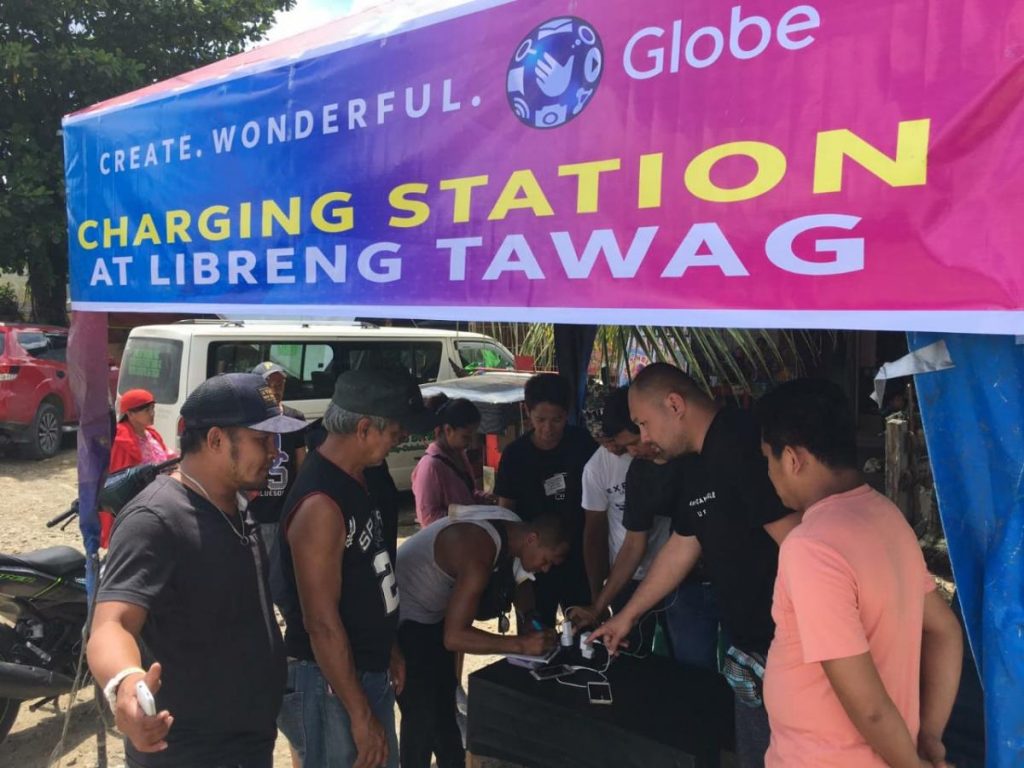
Globe also set up Libreng Tawag and Libreng Charging stations in Kidapawan City Hall, Tulunan City Hall and Plantation Residence, Makilala, to help victims get in touch with their families and friends. Globe remains ready to deploy more free call and charging stations in the affected areas.

Ayala group aids relief efforts in quake-hit Mindanao
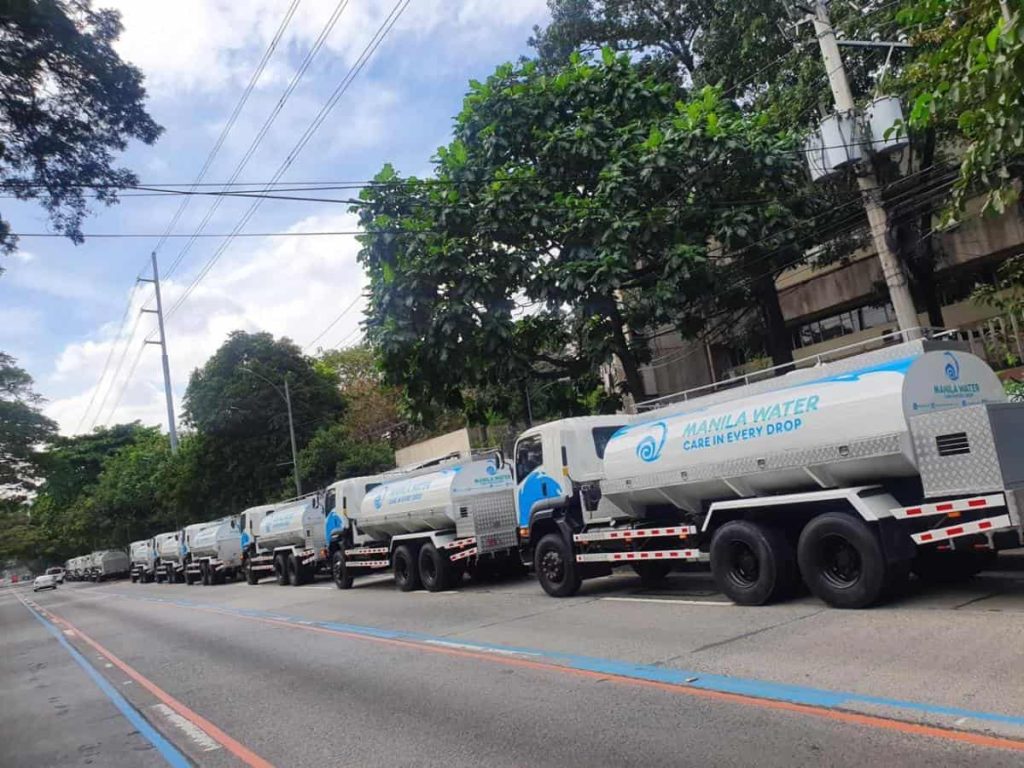
photo credit: Manila Water

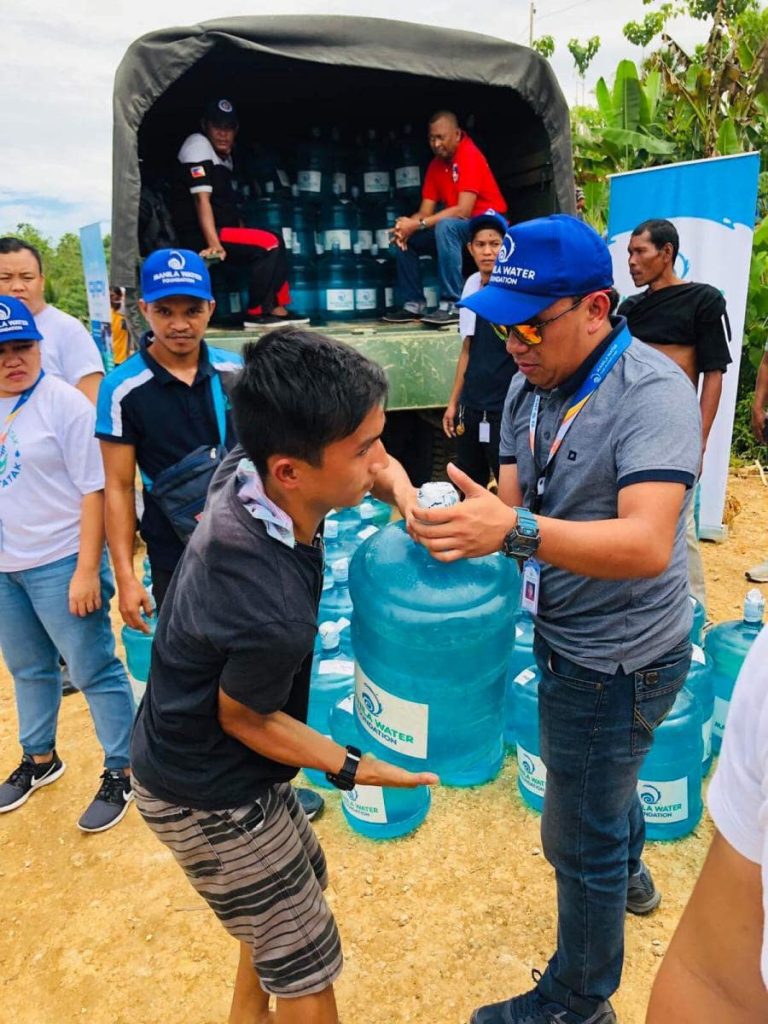
Manila Water and its social development arm Manila Water Foundation are distributing 2,320 five-gallon Healthy Family water bottles. One thousand of these bottles will be distributed at Kidapawan and Tulunan, North Cotabato in partnership with OCD and PDRF, another 1,000 bottles at Makilala, 300 units at Magsaysay, Davao del Sur in partnership with Philippine Coast Guard Auxiliary, and another 20 units for employees of BPI Kidapawan Branch.

Manila Water is on standby to deploy one of its Mobile Treatment Plants (MTP) to any affected area in Mindanao. The MTP, which is stationed in Caticlan, Boracay, can treat and convert any type of raw water—river water, flood water, and even saltwater—into potable drinking water.

Ayala companies are also doing their part to aid the community and the affected families of their employees. Ayala Land (ALI) has been collecting donations in kind at Ayala Malls in nearby provinces since November 1. Abreeza Mall in Davao is cooperating with the local government to collect and deliver donations to the LGU’s Task Force Davao headquarters, who will distribute goods to affected families in Davao del Sur and North Cotabato. Besides collecting shoppers’ donations, Abreeza Mall is also preparing relief packs for the families of mall personnel affected by the earthquakes. Centrio Mall in Cagayan de Oro (CDO) is similarly collecting donations that will be distributed by the Philippine Red Cross and AFI in the Makilala and Kidapawan areas. Furthermore, all Ayala Malls are donating old tarpaulins to be used as makeshift shelter.

ALI’s Seda Hotels are also contributing to the relief efforts for its affected employees and communities.

Bank of the Philippine Islands (BPI) rolled out initial relief operations for affected employees in Kidapawan and Digos, providing them with basic necessities like temporary shelter, water, food and medical kits.  Through BPI Foundation, it is currently working with relevant organizations for appropriate recovery programs to support the affected communities in Mindanao.

AC Health’s Generika, together with the Ayala Young Leaders Congress Alumni Association in Mindanao, is donating medicines and helping collect donations for the relief efforts in the Tulunan, Makilala and Kidapawan areas.

Private entities and individuals are welcome to donate goods for the immediate assistance of displaced families in Mindanao. Critical needs include but are not limited to the following: blankets, tents, sleeping mats, rice, canned goods, potable water, hygiene products, tarpaulins, mosquito nets, cooking utensils and equipment, clothing, flashlights, etc.

Cash donations for Ayala’s disaster relief efforts may be deposited through AFI’s designated bank account below: 

Account Name:  Ayala Foundation, Inc.
Account No.: 0011-1335-41
Bank: Bank of the Philippine Islands
Branch:  Makati Main
Reference No.: G101
Swift Code: BOPIPHMM

The Philippines is ripe for more foreign investments; electronics manufacturing sector seen to sustain growth

Makati, Philippines — October 28, 2019 Ayala Chairman and CEO Jaime Augusto Zobel de Ayala believes that the Philippines, which has often been overlooked as an investment destination in ASEAN, is more than ready to compete on a global scale. This, after the country has remained resilient amidst external shocks with 82 consecutive quarters of steady economic growth since 1999, including solid performances even after the 2008 global financial crisis. The country’s purchasing power has also grown, with GDP per capita expanding by 3% CAGR over the last five years, reaching US$3,100 in 2018. All these factors, coupled with stable interest rates that support favorable borrowing costs for foreign investors, are the critical pieces that will further sustain the Philippines’ growth.

“It is only in the recent years that the Philippines has begun to get noticed. Traditionally, [our country] is not the investors’ first choice—they go to Vietnam or Thailand. But if they look at the actual results, it’s been very positive.  And for Ayala, I think part of the reason that we have grown fairly strong in the last couple of years is that we have kept reinvesting in the country, and the return has been good. With a stable currency, we’ve compounded above average returns over the years,” Zobel said.

According to ADB and the World Bank, a developing country could reach high-income status if its manufacturing output and employment is sustained at 18% over a period. Zobel believes that the Philippines has the ingredients necessary to take advantage of this trend and become an emerging force in electronics manufacturing. The country’s young, skilled, highly mobile and English-speaking workforce (average age of 24 years) is seen as a competitive advantage amidst the advent of the Fourth Industrial Revolution. Furthermore, the current administration’s push for infrastructure development and favorable incentive schemes for manufacturers provide the necessary conditions to allow the Philippines to succeed in this sector.

AC Industrials’ Integrated Micro-Electronics, Inc. (IMI), Ayala’s high-tech manufacturing arm, is poised to lead this sector in the country. In 2018, IMI ranked 18th in the top 50 list of EMS Providers and the 5th largest EMS Provider in the automotive market.

Taiwan’s Sercomm Corporation is also among those that have successfully benefitted from the steady rise of Philippine manufacturing. It has employed hundreds of Filipinos for more than a decade. Founded in 1992, Sercomm is developing broadband customer premise equipment for global telecom service providers. Sercomm President James Wang echoed Zobel’s insights in the attractiveness of the Philippines as an investment destination. He added, “with [the Philippines’] proximity to China’s coastal provinces and Taiwan, its geographic advantage helps me manage my supply chain clusters and manage risks in doing business.”

Zobel and Wang participated in the Harvard Business School Asia-Pacific Advisory Board (APAB) held recently in Taipei. Zobel chairs the APAB and Wang chairs the Harvard Business School Association of Taiwan.

About Sercomm Corporation:  www.sercomm.com/contpage.aspx?langid=1&type=info&L1id=1&L2id=1

The Philippines is ripe for more foreign investments
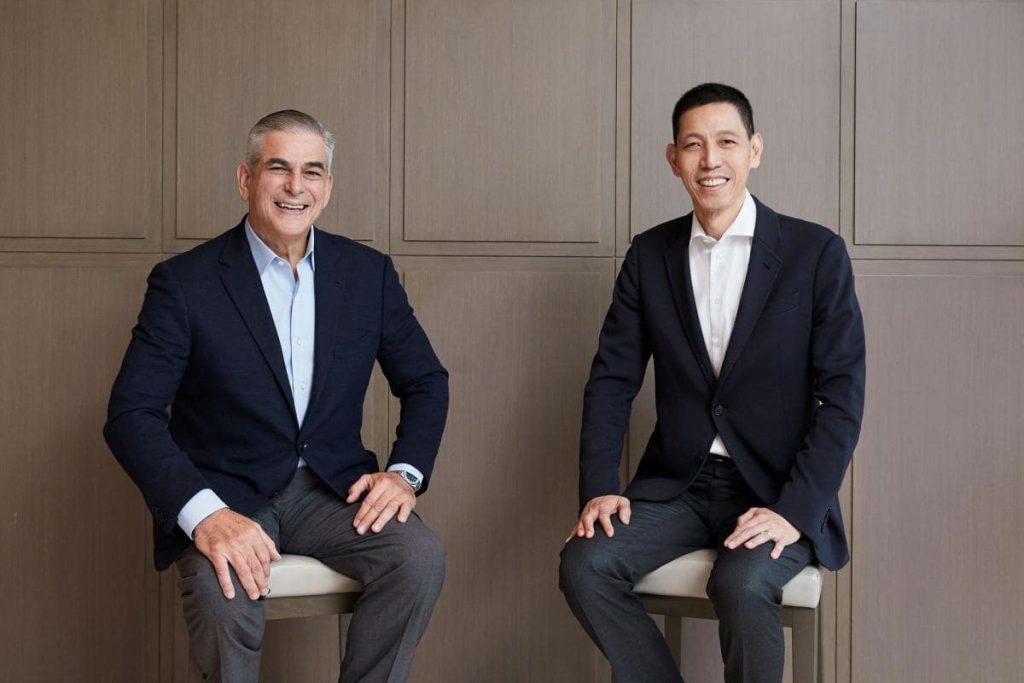
In photo (L-R): Ayala Chairman & CEO Jaime Augusto Zobel de Ayala
Sercomm President & CEO James Wang

Ayala recognizes local communities as the driving force behind sustainable tourism

Makati, Philippines – September 27, 2019 Ayala President & COO Fernando Zobel de Ayala believes that tourism is one key sector that could unlock unprecedented benefits for the Philippines. Sustainable tourism could further induce economic growth and create meaningful impact for the country’s environment and local communities.

 “I would like to believe that both the country and our many domestic and foreign tourists now have a renewed sense of responsibility for our fragile ecosystem. Beyond preserving our destinations for their aesthetic and environmental appeal, sustainable tourism holds tremendous potential to responsibly unlock economic value,” Zobel said in his address to members of the academe, industry and government at the recently held Ayala-UPSE Economic Forum.

In 2018 alone, the Philippines welcomed an all-time high of 7.1 million international visitors. Tourism also contributed to P2.2 trillion to the economy, equivalent to 12.7% of GDP. The sector also supported 5.4 million jobs or 13% of the country’s total employment. With more meaningful investments, the Philippines could reach the 10 million visitor milestone within the next few years. However, Zobel equally stressed that “Any initiative on developing an area should always integrate and address the interests of the environment and the local communities.”

At Ayala, estate development plans reflect these considerations. For example, Ayala Land’s (ALI) Carbon Forest Program is designed to absorb and store carbon in six project sites covering some 587 hectares of land. The program protects and restores early secondary growth forests in swamplands, wetlands and inland location across the country. Lio Tourism Estate in El Nido has 48 hectares of these forests.

On the sociocultural and economic aspects, ALI continues to partner with the El Nido community by sourcing from them local resources for its operational needs. Some 70% of ALI’s El Nido employees also come from the community.  An internship program trains them to be the next generation of sustainable tourism leaders.

“Tourism is seen as an easy, sustainable solution to provide coastal communities with alternative sources of income. Advocates believe that ecotourism simultaneously encourages community residents to become active stewards of the local coastal ecosystems,” said Dr. Ramon A. Alampay, Ph.D., Associate Professor at the UP Asian Institute of Tourism and a guest speaker at the forum.

Alampay focused on the critical role communities play as agents in the care and keeping of the mangroves in coastal towns where these are typically overlooked as an ecotourism centerpiece. Moreover, mangroves act as a natural coastal defense, preventing soil erosion and flooding. They are effective carbon sinks, capable of removing up to four times more carbon in the atmosphere, compared to tropical forests. They maintain water quality, enhancing the breeding ground for wildlife and protecting biodiversity. He emphasized the need for ecosystem-based approaches toward coastal conservation and sustainable tourism development.

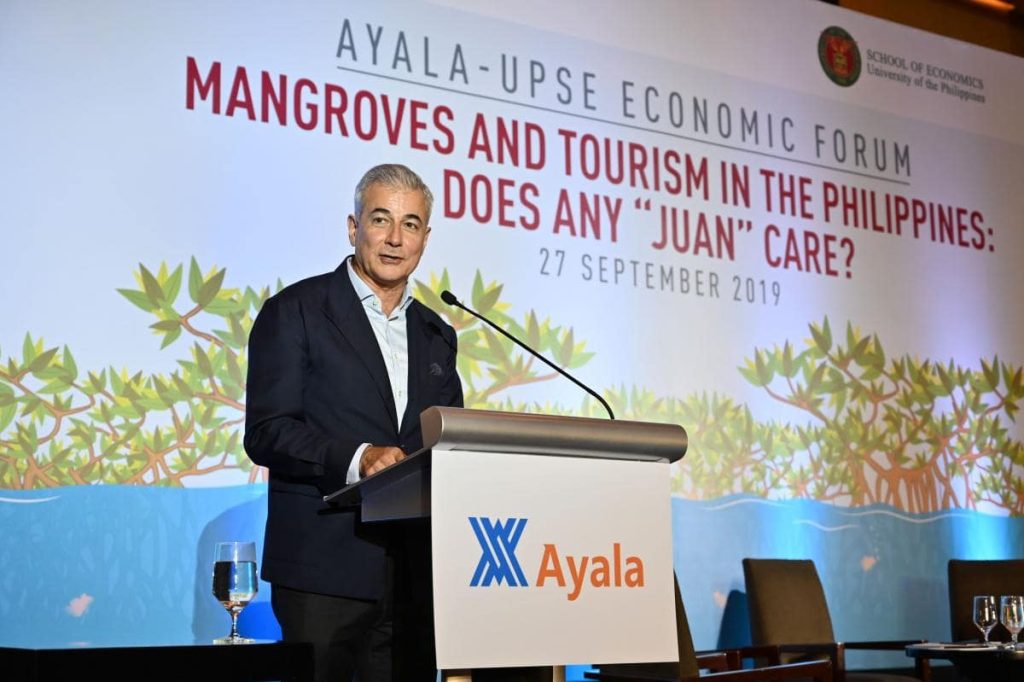
Ayala recognizes local communities as the driving force behind sustainable tourism
At the Ayala-UPSE Economic Forum held on September 27, 2019, Ayala President & COO Fernando Zobel de Ayala shared his thoughts on sustainable tourism as a key sector that could unlock tremendous benefits for the Philippines’ economic growth. However, Zobel stressed that “Any initiative on developing an area should always integrate and address the interests of the environment and the local communities.

Ayala’s Head of Sustainability Unit among Asia’s Top Sustainability Superwomen

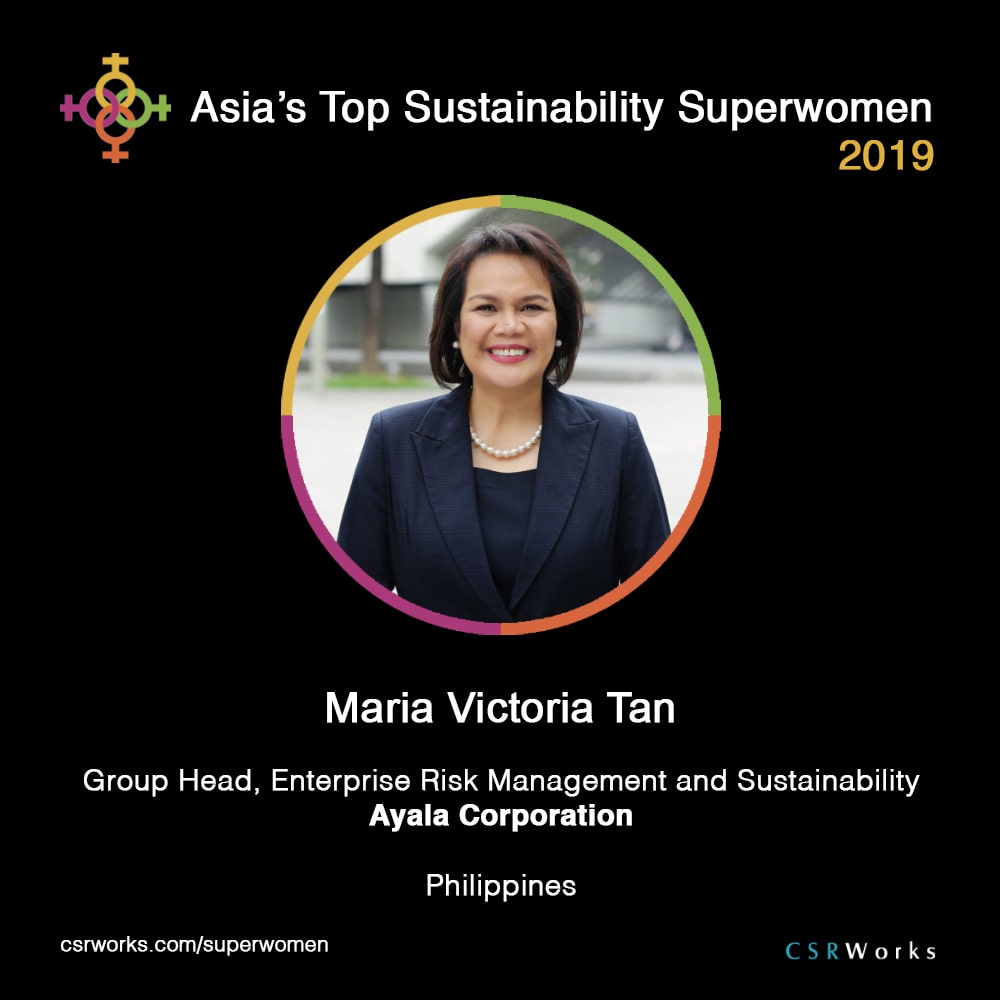
Singapore – September 5, 2019 Ayala Corporation (Ayala) Head of Group Risk Management and Sustainability Unit Maria Victoria Tan was included among Asia’s Top Sustainability Superwomen, an annual listing of exceptional female sustainability leaders in the region. Only 27 women from 11 countries were chosen out of 126 nominations from 20 countries across Asia. These “Sustainability Superwomen” were selected by an international jury, who reviewed nominees’ contributions in leading change through sustainability strategies and initiatives both within and outside of their organizations. Asia’s Top Sustainability Superwomen is a non-profit project initiated by CSRWorks International, Singapore’s most trusted name in sustainability consulting, training and thought leadership.

Among her other accomplishments in the Ayala group, Tan was instrumental in formulating the Ayala Sustainability Blueprint that was launch in April 2019. The blueprint is a long-term, group-wide plan specifically designed to support the achievement of the UN Sustainable Development Goals (UN SDGs) by 2030. It enables Ayala to tangibly contribute to areas where its businesses can generate the most significant and lasting impact. Ultimately, it aims to bridge the Filipino to 2030, where Ayala sees him rooted in a safe, secure, sustainable, inclusive, and progressive country.

“At Ayala, it is necessary for our companies to be sensitive to the needs of our communities, which helps us determine our business models and methods and work toward our sustainability goals… This drive for sustainability is meant to ensure that Ayala’s businesses not only create value but leave a meaningful impact in the communities where we serve,” said Ayala CFO and Chief Sustainability Officer Jose Teodoro K. Limcaoco. (taken from FTSE press release)

The 2019 List was announced by Global Reporting Initiative’s (GRI) CEO Tim Mohin, and Ásthildur Hjaltadóttir, GRI’s Chief of Network Engagement and Regional Implementation Officer, who were Guests of Honor at the Asia Sustainability Reporting Summit’s networking cocktail reception in Singapore. They presented Superwoman Certificates as a mark of honor to the Sustainability Superwomen attending the event.

Rajesh Chhabara, managing director of CSRWorks International, said, “We’re delighted to see Asia’s Top Sustainability Superwomen go from strength to strength. These women have led the way on sustainability and diversity throughout Asia. We hope that by celebrating their numerous achievements we will inspire more women to become future sustainability leaders.”

Sustainability continues to shape the Ayala group, which first formally aligned its businesses with the UN SDGs in 2016, and became a founding member of the UN Global Compact Network Philippines in 2017. It also became the first Philippine member of the World Business Council for Sustainable Development in 2019.

Ayala’s Head of Sustainability Unit among Asia’s Top Sustainability Superwomen
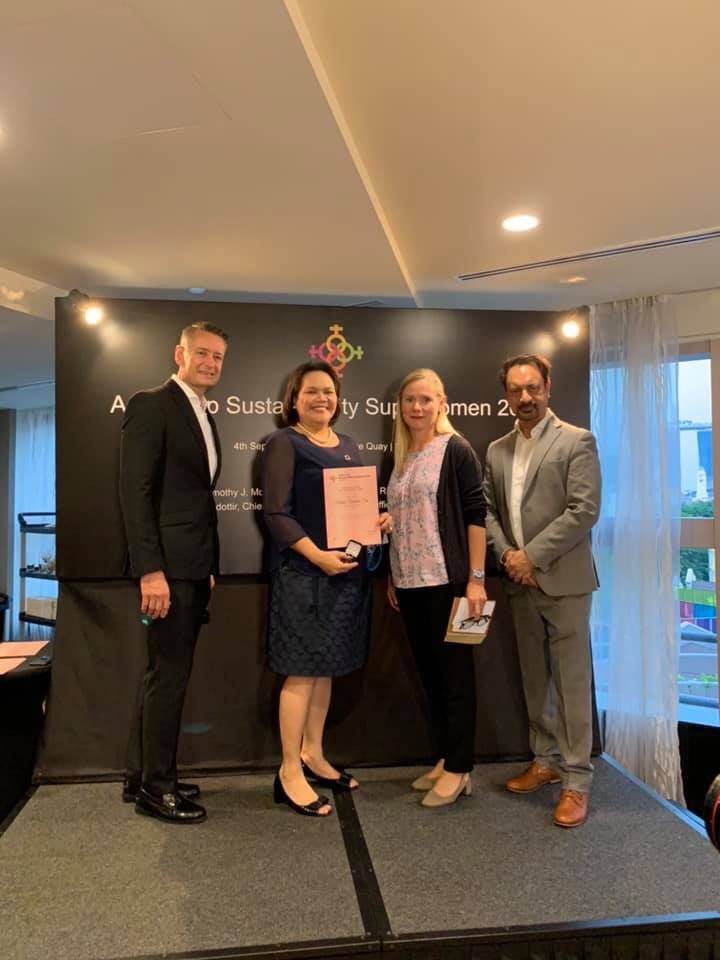
Ayala’s Head of Sustainability Unit Maria Victoria Tan was honored as one of Asia’s Top Sustainability Superwomen in Singapore on September 5, 2019. Twenty-seven women from 11 countries were chosen to receive this honor by CSRWorks International, Singapore’s most trusted name in sustainability consulting, training and thought leadership.

Ayala’s Head of Sustainability Unit among Asia’s Top Sustainability Superwomen
L-R Tim Mohin, Chief Executive,  Global Reporting Initiative (GRI)
VICKIE TAN, Sustainability Superwoman 2019, Group Head, Enterprise Risk Management and Sustainability, Ayala Corp.
Asthildur Hjaltadottir, Director Regions and Programs Implementation, Global Reporting Initiative (GRI)
Rajesh Chhabara, Managing Director,  CSRWorks International

Ayala Chairman & CEO Jaime Augusto Zobel de Ayala’s Panelist Message at UN GCNP and GRI Regional Sustainability Summit 2019

JAIME AUGUSTO ZOBEL DE AYALA
UN GCNP AND GRI REGIONAL SUSTAINABILITY SUMMIT
August 20, 2019 | CONRAD HOTEL
PANELIST MESSAGE


_____________________________________________________________________________________________

Good morning to everyone. ​

​I congratulate UN Global Compact Network Philippines and GRI for organizing this summit and bringing together members of the private sector to put emphasis on the topic of sustainability.​

Today, let me touch on the Ayala group’s sustainability journey—the thinking behind our sustainability philosophy, the tangible ways we are supporting this framework, and some of the challenges that we face along the way.​​

In recent years, we have seen how the significant progress in our economy has yet to materialize in the lives of a majority of Filipinos. We have always believed that in a developing economy like ours, businesses play an indispensable role in helping address some of the most pressing social and economic development challenges. This is not just a responsibility of our governments. ​To remain relevant, to continue building trust with the communities we interact with, businesses must contribute to  society as a whole, and be part of the progressive development of the markets they serve. In our case, Ayala has a presence in diverse industries that touch on important human needs—housing, water, telecommunications, financial services, transport, healthcare, and education. By integrating societal engagement into our corporate strategies, we believe we can play a role in alleviating some of the development challenges our country faces today.​​ ​It has become clear to us that businesses cannot operate in a vacuum, linked only to communities through the investments they make, and the products and services they generate. The role of private enterprise needs to go beyond this. The development of our societies and economies in recent years has shown us that more is demanded from private enterprise as well. We need only look at the pockets of social tension that have risen around the world brought about by inequity, lack of opportunity, and the failure of many of our institutions to foster a more equitable and sustainable future. ​These issues have led to significant introspection across our leadership teams and led us to broaden our products and services with the aim of more formally contributing to greater economic and social inclusivity. Our group actively looks to identity opportunities for disruption in sectors that are undergoing pain points or challenges in affordability, quality, and accessibility. ​

On a personal note, these ideas began to percolate in my mind after I left business school in the late 1980s. While I continue to place great value on the education I received, at the time, it also occurred to me that a significant component of my studies was not necessarily relevant to the changing development needs of the Philippines. I would later meet a number of thought leaders who would expand on these ideas in new, progressive ways, like Harvard professor Kash Rangan, who spoke on doing business at the base of the economic pyramid before it became part of mainstream thinking. Similarly, Michael Porter, another Harvard professor, developed his thesis on “creating shared value” and provided a new business framework for these ideas and became a significant influence to our thinking across the Ayala group. ​Michael Porter defines “shared value” as policies and operating practices that enhance a company’s competitiveness, while advancing the economic and social conditions in the community where it operates.​

This year, Ayala is celebrating its 185th anniversary, and looking back at our recent corporate history, we have evolved to put greater focus in terms of capital, time, and energy to truly align our business objectives with the social and economic development needs of the country. This philosophy has become a key part of our strategies and decision-making process.​ The United Nations Development framework and the Sustainable Development goals could not have come at a better time.  It gave us a chance to align our new strategies with a broader global framework and set of objectives.​

To institutionalize this, we designed a long-term sustainability blueprint that lays out actionable and measurable targets that address critical environmental, social, and governance gaps we face in our country today. We identified 1) marginalization, 2) large untapped potential of our human capital,  and 3) irresponsible growth leading to long-term environmental damage as the three critical challenges our group will focus on. ​

The Ayala Sustainability Blueprint, specifically designed to support the achievement of the  * UN Sustainable Development Goals by 2030, has allowed us to be more deliberate in monitoring and evaluating our sustainability targets and will help us allocate resources to these initiatives more appropriately. Moreover, this greater level of transparency leads to greater accountability on our part in executing on these aspirations.​ Under the blueprint, we will focus on contributing to the achievement of three pillars where we believe our businesses can generate the most significant and lasting impact. These are: 1) access and inclusivity,  2) productivity and competitiveness, and   3) responsible growth and innovation. Let me expand on this by citing examples of our initiatives across the Ayala group in support of these three pillars.​

Let me start with the first pillar, namely access and inclusivity. While our country has shown consistent growth over the past decade, we face the challenge of seeing this progress materialize and spread to the lives of a much larger percentage of the population. We have always believed that in a developing economy like ours, businesses play an indispensable role in helping address this continuing challenge of closing income gaps and ensuring broad based development. We all know how the Philippines is entering a positive demographic growth pattern that has the potential to create a productive workforce over the next decade. However, we need to equip this young population with the relevant skills to prepare them for the disruptive changes in the employment requirements of the future. It is disheartening to see that the lack of sufficient access to affordable quality education has led to high dropout rates and quality issues across all educational levels in the country. At Ayala, we have seen this as an opportunity for positive engagement, and a chance to contribute to our country’s human capital development. ​

Through our APEC Schools, now the largest chain of stand-alone private high schools in the country, we are contributing to the education needs of those students who need to go on to college, or find entry level professional employment out of high school.

AC Health is establishing itself as a key player in the Philippine healthcare industry through its rapid expansion in preventive care, sale of affordable generic medicine, and health technology, with future investments into hospitals and specialty care. With 54 clinics, FamilyDOC is now the largest chain of primary care clinics in the country. Having served over 250,000 unique patients, it is focusing on preventive care at the primary care level, rather than just curative treatment. Similarly, Generika is expanding its wellness product offerings and health consultations at affordable price points.​

The second sustainability pillar I want to highlight is productivity and competitiveness. The Ayala group has always supported the country’s efforts to develop its physical infrastructure, aligning our own strategy to support the government’s agenda.

From three major estates in the 1990s including Makati, Ayala Land now has *  26 estates spanning 57 growth centers nationwide. All these estates are sustainably and functionally designed, providing a better quality of life as well as economic progress within and around, those areas through employment opportunities and entrepreneurial activities. These estates feature Ayala Land’s different product lines—from residential, shopping centers, offices, as well as hotels and resorts.​ Moreover, our investments in hotels and resorts is contributing to the development of tourism as a growth engine for the country.

Ayala Land has expanded its portfolio to include affordable and socialized housing, launching two new residential brands, Amaia and Bella Vita, that cater to much lower consumer price points.  In the telecom sector, ​Globe initially only targeted the top-end post-paid market, but over time aggressively expanded into the prepaid segment, which has allowed the company to give mobile access to a much larger percentage of the population.​

Globe’s foresight and aggressive growth strategy has contributed to a digital revolution in the Philippines, changing the way Filipinos connect and altering their consumer preferences. As early as 2010, Globe had already seen the market shift towards smartphones and data.​ It is continuously investing and upgrading its network while ramping up its digital content offerings to connect a greater number of Filipinos to the internet and even make financial services more accessible across a broader demographic. ​

AC Infra continues to help augment the increasing infrastructure capacity requirements as a result of a growing digital economy. ​

Last year, it set up Entrego, a logistics and fulfillment solutions platform, to capture the strong growth of e-commerce in the Philippines. Entrego is expanding its presence nationwide with its 64 hubs covering 95 percent of the country, serving clients in various industries such as e-commerce, fintech, telco, and financial services.​ Moreover, we are proud to say that the Ayala group is one of the largest employers in the country, providing  * employment opportunities to over 130,000 individuals.​​ We have always regarded our human capital as one of our country’s strongest competitive advantages as a country. Filipinos are well-regarded internationally for our resilience, flexibility, and creativity. Through our investments, we hope to be able to harness the full potential of Filipinos’ natural strength by helping nurture their intellectual, mental, and physical well-being.

A final touchpoint on the second pillar of contributing to productivity and competitiveness can be seen in BPI’s business transformation.  BPI’s digital transformation is addressing financial inclusion as it facilitates higher engagement with the unserved and underserved segments of the population, particularly the micro, small, and medium enterprises and the lower-income consumer segments. With increased efficiencies and lower cost, digitalization will make financial inclusion for more sustainable. ​In addition, BPI continues to ramp up its microfinance arm, BPI Direct BanKo. Since its creation three years ago, BanKo has disbursed loans amounting to over 4 billion pesos to nearly 56,000 entrepreneurs. Its number of branches has grown to 250 by today. BanKo is targeting to grow its loan portfolio by six to seven times by 2022.​ Globe Telecom is doing the same, through new channels, by its launching Mynt, its joint venture with Ant Financial from China.

The third and final pillar that I want to discuss is our desire to contribute tangibly to responsible growth and innovation. Part of creating sustainable long-term value is holding ourselves accountable not only for our impact to our stakeholder community but to the broader physical environment within which we operate. In recent years, we have increasingly placed a higher importance on how we can contribute to achieving a low carbon and climate resilient environment. ​

Over the past couple of years, AC Energy has deliberately redesigned its strategy to focus on renewable energy. It can be recalled that we entered the sector at a time when the Philippines was faced with a looming power shortage and needed reliable and affordable baseload capacity. Since then, the economics, efficiencies, and the ability to build renewable technology to scale has improved significantly. AC Energy is taking advantage of this opportunity and has since over weighted its investments in this space, particularly in the solar, wind, and geothermal sectors.

In 2018, it generated *2,800 gigawatt hours of attributable energy, *48 percent of which came from renewable sources. ​

AC Energy is committed to scaling up its renewables portfolio and has set a target to achieve 5 gigawatts of capacity across various technologies by 2025, with renewables *contributing at least 50 percent of total energy output. ​In addition, the 410 million dollar Green Bond it raised early this year, a first in Southeast Asia, will be used to fund renewable energy projects. ​

AC Industrials also continues to assemble a portfolio of global businesses in  disruptive technologies in rapidly-transforming industries across the manufacturing and automotive sectors.

Finally, two years ago, Ayala Land announced a target for its commercial properties to achieve carbon neutrality by 2022. We are happy to report that 62 percent of its emissions are now offset by its 560-hectare carbon forest and its properties’ increased reliance on renewable energy sources.​

Our biggest effort to help the environment is our Project Kasibulan. We endeavored to go beyond tree planting and instead, we paved the way for the private sector to adhere to reforestation and forest protection. We started this initiative in North Luzon, with the intention of expanding this nationally, we are now in the midst of starting phase 2 moving towards a vital part of Mindoro’s forest. With this effort, we hope to contribute to protecting the Tamaraws and the Philippine bird called the Luzon Bleeding Heart, both of which are considered critically endangered species.

Bottom line, looking at all our targets, we believe that our partnership with the UN Global Compact and our recent membership to the World Business Council for Sustainable Development will help us align ourselves more formally to this changing, progressive global agenda.

I hope that these examples from across the Ayala group give some color to our ambitious sustainability journey through 2030.  We keep adjusting our business imperatives but I can only reiterate how the foundation of the UN Sustainable Developments goals has helped us in the re-alignment of our corporate initiatives.

These have allowed us to anchor our plans on the new global compact that  must become part and parcel of how we all do our own small part to help reverse some of the negative aspects and challenges of our need for growth and development.

Thank you.

Zobel pushes Ayala Sustainability Blueprint; Globe joins UN GC Network Philippines

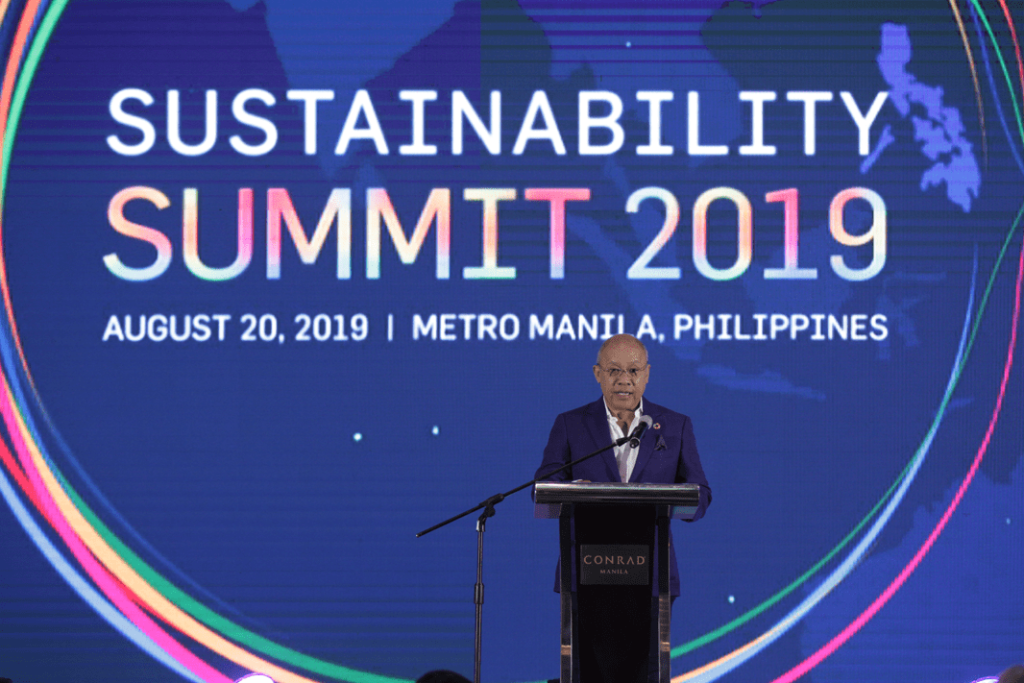
Pasay City, Philippines – August 20, 2019 Ayala believes that building sustainability into business strategies, goals and practices would enable companies to grow responsibly while safeguarding their relevance to stakeholders.

Ayala Chairman & CEO Jaime Augusto Zobel de Ayala recently was one of the panel speakers at the United Nations Global Compact Network Philippines’ (UN GCNP) Sustainability Summit 2019, where Ayala was a platinum co-sponsor. At the panel, he placed a special emphasis on integrating sustainability in business strategies because at Ayala, sustainability is key to bridging persistent societal gaps that have excluded many Filipinos.  In April 2019, it furthered this integration by launching the Ayala Sustainability Blueprint, a framework that allows each business unit to champion specific United Nations Sustainable Development Goals (UNSDGs) and make significant impact in sectors that would benefit the most. Ultimately, it aims to bridge the Filipino to 2030, where Ayala sees him rooted in a safe, secure, sustainable, inclusive, and progressive country. Ayala, a founding member of the GCNP in 2017, first formally aligned its businesses with the UNSDGs in 2016.

 “We designed a long-term Sustainability Blueprint that lays out actionable and measurable targets that address critical environmental, social, and governance gaps that the country faces today. It is specifically designed to support the achievement of the UNSDGs by 2030 that will enable us to be more deliberate in monitoring and evaluating our sustainability targets and allocate resources to these initiatives more appropriately,” said Zobel, who in 2017 was named a UNSDG Pioneer for Sustainable Business Strategy and Operations.

Earlier today, Globe Telecom, Inc. (Globe), Ayala’s telecommunications arm, became the first business unit within the Ayala group to join the UN GCNP. Globe’s sustainability philosophy is anchored on its Purpose of treating people right to do a Globe of Good. Globe focuses its contribution to SDG 9: Industry, Infrastructure and Innovation as the company continues to invest in ICT infrastructure, bringing internet connectivity and digitalization to the Filipino people. 

“Integral to our vision of the Philippines as an admired nation is having first world internet connectivity supporting a robust digital economy.  We will continue to push forward with innovations that enrich the lives of Filipinos, promote financial inclusion, education, health and wellness, livelihood and so much more,” said Globe Telecom President & CEO Ernest L. Cu.

Since UN GCNP’s formation in 2016, its board composed of founding members Ayala Corporation, Philippine Marketing Association, Landbank of the Philippines, Manila Doctors Hospital, Pilipinas Shell Petroleum Corporation together with board members Nestle Philippines and International Care Ministries, an NGO who has recently joined, has tirelessly pursued a number of firsts in jumpstarting the Sustainability agenda in the corporate world.

It has launched the very first Sustainability Summit in November 2017 at the Philamlife Tower to raise awareness on the challenges of building sustainable businesses in the country. In the same year, an informal round table discussion on a similar topic with Unilever’s Philippine CEO, Mr. Benjie Yap was organized which created a positive impact in the business community. In 2018, Mr. Zobel, who became an SDG Pioneer in 2017, incited the conversation on the long term benefits of looking at sustainability through a business lens at the first-ever CEO SDG Circle Forum in Manila. In the same year, GCNP held the first SDG Reporting Summit at Manila Doctor’s Hall. Today, its founding members jointly call on other private entities to strongly adapt the SDGs in their businesses to help scale faster its global achievement by 2030.

Zobel pushes Ayala Sustainability Blueprint; Globe joins UN GC Network Philippines

Globe Telecom, Inc. (Globe) was formally welcomed as a participant to the UN GC Network Philippines becoming the first business unit within the Ayala group to become part of the largest sustainability movement for business in the world. Globe champions UN Sustainable Development Goal 9 focused on Industry, Infrastructure and Innovation as the company continues to invest in ICT infrastructure, bringing internet connectivity and digitalization to the Filipino people. “Integral to our vision of the Philippines as an admired nation is having first world internet connectivity supporting a robust digital economy.  We will continue to push forward with innovations that enrich the lives of Filipinos, promote financial inclusion, education, health and wellness, livelihood and so much more,” said Globe Telecom President & CEO Ernest L. Cu.

Zobel pushes Ayala Sustainability Blueprint; Globe joins UN GC Network Philippines-2

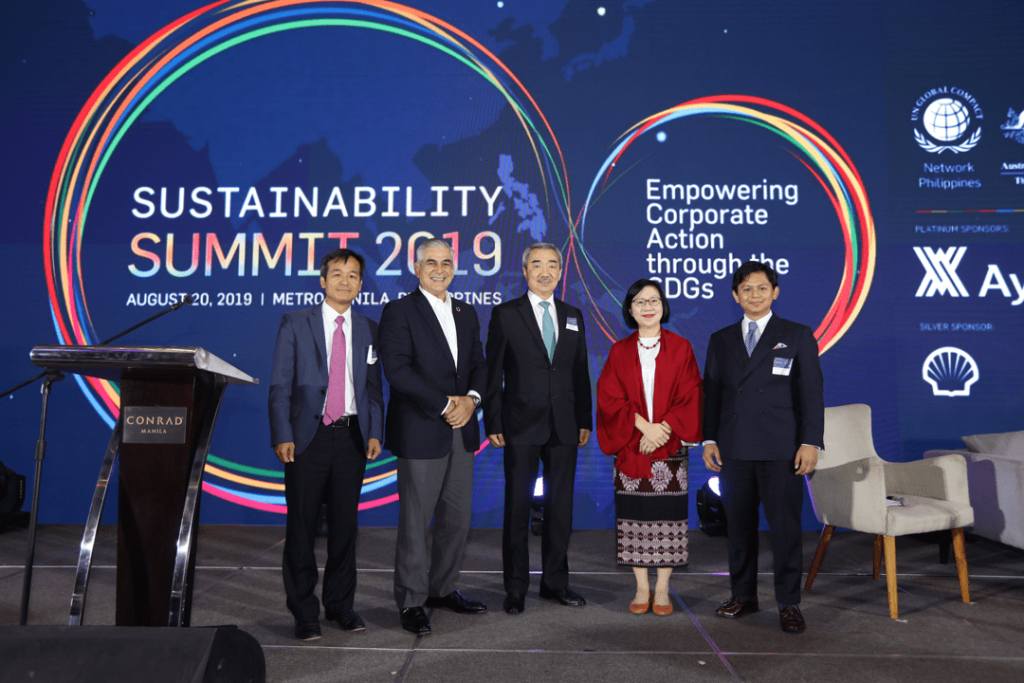
At the United Nations Global Compact (UN GC) Network Philippines’ Sustainability Summit 2019 last August 20, Ayala Chairman & CEO Jaime Augusto Zobel de Ayala joined a panel and shared how the Ayala Sustainability Blueprint allows the group to grow responsibly, remain relevant to its stakeholders and help address persistent societal gaps that affect Filipinos by aligning with UN Sustainability Development Goals. Globe Telecom became the first Ayala company to join the UN GC Network Philippines.

In photo L-R:

Saran Song, AMRU Rice Cambodia Chair & CEO
Jaime Augusto Zobel de Ayala, Ayala Chairman & CEO
Hans Sy, SM Prime Holdings, Inc. Chairman of Executive Committee
Meshvara Kanjaya / President & Director / Ranch Market (Indonesia)
Ericson James Pacaba, Moderator

Ayala President & COO Fernando Zobel de Ayala’s Closing Remarks at the Ayala Group Integrated Corporate Governance, Risk Management and Sustainability Summit 2019

FERNANDO ZOBEL DE AYALA
AYALA GROUP INTEGRATED SUMMIT 2019 (Corporate Governance, Risk Management, and Sustainability)
August 9, 2019 | New World Makati
CLOSING REMARKS
________________________________________________________________________________________________

Thank you to everyone for joining us in this milestone gathering.  It was wonderful to hear from some our speakers and this is probably one of the first summit of its kind. My thanks to TG, Mon, Vickie, and Cathy for leading this effort and always raising the bar for the Ayala group.

I would like to thank our speakers Peter Bakker, Commissioner Amatong, Miho Kurosaki, Ben Ridley, and Dominic Thurbon for their insightful presentations as well as our moderator Jessica Cheam for a productive exchange in the panel session. I think you will all agree that these sessions have provided a deeper sense of global trends in ESG.

Our own ESG framework at the Ayala group is a constant work in progress and these gatherings help us ensure that we are always evolving and relevant to our environment. I learned so much from our speakers today and let me quickly recap some highlights from their sessions. My thanks to Celeste for helping me recap some highlights from their sessions.

In Peter’s session, we took note of the strong correlation between sustainability and financial performance. A board’s responsibility now goes beyond the fiduciary duty and should encompass ESG considerations. The board must now be held accountable for the company’s sustainability performance and not just financial returns. Creating a separate P&L for environmental and social metrics is something we will definitely look into at the Ayala group.

In Commissioner Amatong’s session, a key takeaway for me is that instead of viewing this new rule from the SEC mandating the submission of sustainability reports as one more government report, it should be considered instead as an opportunity for listed companies to communicate our sustainability performance properly. The key learning here is the importance of making sure that we have accurate data available for investors and third-party rating agencies who evaluate us based on our public disclosures. I also want to thank him for the positive words on AC Energy’s issuance of a green bond early this year.

From Miho, I appreciate the overview of the TCFD framework, which I find to be aligned with our own agenda of integrating ESG with our strategic planning and risk management processes.

From Ben and Dominic, we have heard how impact investing has gained traction in recent years, driven by market dynamics such as technological disruption, and customers rewarding sustainable practices. They both highlighted the need to adopt a paradigm shift and view ESG from a strategic perspective—that it should be part and parcel of our overall strategic planning, decision-making, and investment process. As Jaime mentioned earlier, at the Ayala group, we have been pushing the envelope around this new thinking, with the creation of the Ayala Group Sustainability Blueprint, which now entails close monitoring.

The insights we gained today would serve us well as we work towards the achievement of our goals under the sustainability blueprint. I know that there are more sessions this afternoon and I hope that you also find them useful.

The seniority of the participants in this conference today is a clear indication of the seriousness with which we are pursuing ESG. We hope we can count on you to keep raising the standards in our business units. 

Our thanks once again to our speakers for your unique insights.

Thank you.

Zobel says infusing sustainability in growth strategies mitigates risks; heightened governance is a must

Makati City, Philippines – August 9, 2019 In a milestone event, Ayala Corporation (Ayala) held its first Integrated Corporate Governance, Risk Management and Sustainability Summit to deliberately push the connection of these three disciplines in driving business growth responsibly. Ayala believes that ingraining sustainability in growth strategies significantly helps mitigate risks, which leads to heightened governance procedures and better disclosures. This is a strategic imperative at the Ayala group.

“We believe that by integrating Corporate Governance, Risk Management and Sustainability, we will fortify the group’s capacity to function as a more efficient and relevant partner in nation building. To us, sustainability is key to bridging persistent societal gaps that have disenfranchised generations of Filipinos,” said Ayala Chairman & CEO Jaime Augusto Zobel de Ayala. In 2017, Zobel was chosen as a UN Sustainable Development Goals (UN SDGs) Pioneer for Sustainable Business Strategy and Operations, a first in the Philippines and Southeast Asia.

Following its Board of Directors’ call for the company to align businesses to the UN SDGs, Ayala launched its Sustainability Blueprint, a group-wide plan that allows its companies to champion and operationalize specific UN SDGs. It aims to help Ayala address major challenges and societal gaps affecting Filipinos today and contribute tangibly to three focus areas. These are Access & Inclusivity and Productivity & Competitiveness for more Filipinos, and Responsible Growth & Innovation for its businesses. The Blueprint’s goal is to bridge the Filipino to 2030, where Ayala envisions the Filipino as a global citizen with firm roots in a country that is safe, secure, sustainable, inclusive, and progressive.

For example, in healthcare, research indicated that 43% of low to middle-income Filipinos have not been to a doctor in more than a year, with 6 out of 10 Filipinos dying without ever seeing a doctor. Because Ayala believes that all Filipinos deserve to live a healthier lifestyle, AC Health is building an integrated ecosystem of accessible, affordable, quality healthcare. It aims to serve one in every five Filipinos by 2030, through FamilyDOC, its community-based primary healthcare clinics, Generika, its retail pharmacy, and various health tech investments.

In the finance sector, about two-thirds of Filipinos are unbanked and thus, vulnerable to the risks connected to unauthorized lenders. Ayala believes that all Filipinos must have alternative means to access the financial system. Through BPI’s BanKo, unbanked Filipinos have access to loan products to start their SMEs. Furthermore, Globe’s Mynt, offers alternative credit scoring models and simplified access to microloans through its mobile platform.

In education, 65% of Filipino graduates are deemed unemployable from the lack of industry-related skills, while 15% of the global workforce are projected to switch jobs by 2030 to meet new demands. Addressing education and employment, Ayala through its partnership with the Yuchengco Group, aims to provide an innovative learning experience to equip students with industry-related skills, help improve graduates’ employment prospects, reduce the dropout rate, and strengthen the quality of educators.

“In my view, we need a deliberate and strong alignment with sustainability principles and adopt clear and consistent long-term thinking. Complemented by effective execution and meaningful impact in critical sectors… Embracing the SDGs as guiding principles to doing business is a winning proposition for both the company and its stakeholders. It goes beyond improving a company’s brand; actual economic value is generated, and companies help the country by addressing underserved needs through inclusive business models, products and services,” concluded Ayala President & COO Fernando Zobel de Ayala.

To accelerate growth of sustainable businesses, Ayala continues to partner with like-minded institutions like the World Business Council for Sustainable Development (WBCSD), where it became the first Philippine member in June 2019, and the United Nations Global Compact Network Philippines, of which it was a founding member in 2017.

Zobel says infusing sustainability in growth strategies mitigates risks
(from L-R) Ayala Chief Sustainability Officer, TG Limcaoco, World Business Council for Sustainable Development (WBCSD) President, Peter Bakker, and Ayala Chairman and CEO, Jaime Augusto Zobel de Ayala, held a joint press briefing during Ayala’s first Integrated Corporate Governance, Risk Management and Sustainability Summit held last August 9, 2019. Zobel talked about Ayala’s recent entry into the WBCSD, a global CEO-led organization of over 200 leading businesses whose members come from all business sectors and all major economies, representing a combined revenue of over US$8.5 trillion and 19 million employees. “We look forward to working with them on how we can elevate our own sustainability engagement to achieve greater impact”, Zobel said.  Ayala is the very first Philippine company to join the WBCSD.

To learn more about the Summit and its full roster of global speakers, click here.

Ayala Chairman & CEO Jaime Augusto Zobel de Ayala’s Opening Remarks at the Ayala Group Integrated Corporate Governance, Risk Management, and Sustainability Summit 2019

JAIME AUGUSTO ZOBEL DE AYALA
AYALA GROUP INTEGRATED CORPORATE GOVERNANCE, RISK MANAGEMENT, AND SUSTAINABILITY SUMMIT 2019
August 9, 2019 | New World Makati
WELCOME REMARKS


_____________________________________________________________________________________________

Good morning to everyone, and thank you for being here.

I would like to welcome our board of directors, senior leadership, management teams, and all our employees across the group for taking the time to be here today. Also joining us today are some of our business partners and guests from the government, civil society, and the academe. Welcome to all of you and thank you for being here.

Special thanks to our speakers, most of whom have flown in from different parts of the world:

  •  Our keynote speaker, Peter Bakker, President and CEO of World Business Council for Sustainable Development based in Switzerland. As you know, Ayala recently joined WBCSD and we look forward to working with them on how we can elevate our own sustainability engagement to achieve greater impact.
  • Commissioner Ephyro Amatong of the Securities and Exchange Commission who will provide some granularity on the SEC’s recently released set of guidelines on sustainability reporting.
  • Miho Kurosaki, Lead Analyst and Researcher on Energy in Japan and Kore at Bloomberg in Japan
  • Ben Ridley, Director and Deputy Global Head of Sustainability Affairs at Credit Suisse in Hong Kong
  • Dominic Thurbon, Partner, Climate Change & Sustainability Services at Ernst & Young in Australia
  • Na Boon Chong, Managing Director, Consulting Southeast Asia at AON in Singapore
  • Derek Taylor, Operations Director for the Crisis and Security Consulting Practice in Asia Pacific at Control Risks in Singapore
  • Elaine Ng, Executive Director for Client Coverage in Asia at MSCI in Hong Kong
  • Deborah Latimer, Partner, Governance, Regulation, and Conduct Advisory at Deloitte in Australia
  • Christopher Coe, Head of the Agriculture and Global Clients at AON in Singapore
  • Nandkumar Vadakepatth, Head of Regional Sustainability Operations at DNV-GL in India

and

  • Our panel moderator, Jessica Cheam, editor-in-chief at EcoBusiness in Singapore

Thank you for taking the time to be here and share your perspectives around the areas of governance, sustainability, and risk management.

As you know, this summit is a milestone event for the Ayala group. For the first time, we have combined corporate governance, risk management, and sustainability into a unified summit whereas in the past, we would hold three separate gatherings. Holding a unified summit that touches on environmental, social, and governance is a natural progression as it facilitates the paradigm shift we have embraced in the Ayala group in the way we view governance, sustainability, and risk management as interconnected disciplines that should be part and parcel of our overall strategic planning, decision-making, and investment processes.

As you all know, to institutionalize this perspective, we designed a long-term sustainability blueprint that lays out actionable and measurable targets that address critical environmental, social, and governance gaps that the country faces today. We identified marginalization, large untapped potential of our human capital, and irresponsible growth leading to long-term environmental damage as the three critical challenges our group can focus on.

The Ayala Sustainability Blueprint, specifically designed to support the achievement of the UN Sustainable Development Goals by 2030, will enable us to be more deliberate in monitoring and evaluating our sustainability targets and will help us allocate resources to these initiatives more appropriately.

Under the blueprint, we will focus on contributing to the achievement of three pillars where we believe our businesses can generate the most significant and lasting impact. These are: access and inclusivity, productivity and competitiveness, and responsible growth and innovation. Let me discuss this in greater detail by citing examples of our initiatives across the Ayala group in support of these three pillars.

This integrated summit is an excellent platform to start a conversation around ESG—how we can elevate our thinking, enhance our capabilities, and raise our current standards to a level that is widely accepted globally.

We have a full day with a solid set of speakers. I thank the organizers of the event—the Sustainability and Corporate Governance teams led by TG Limcaoco and Mon Hermosura.

Again, a warm welcome to you all and thank you for joining us in this first Ayala Integrated Summit on Corporate Governance, Risk Management, and Sustainability. 

Building a Progressive Philippines through Principled, Sustainable, and Long-term Visioning and Execution

Keynote Remarks
Fernando Zobel de Ayala
President and COO, Ayala Corporation
Financial Executives of the Philippines
25 July 2019

***

Mr. Eusebio Tan, President of FINEX; other officers and members of FINEX present today.

Good afternoon. Thank you for the kind invitation to join your general membership meeting. It is an honor to share some thoughts on building a progressive Philippines through sustainable and long-term visioning and execution. I believe that these are critical topics for the development of our economy, especially given Asia’s rapid ascent as the global epicenter for massive economic growth.

We as a country cannot afford to let this opportunity pass us by. I believe that the Philippines remains in a unique position to ride this strong period of growth in the region: our economic fundamentals are strong, and we continue to enjoy a demographic dividend. We do however face several economic and social challenges that we must address. In fact, accelerating our growth depends on how well we address persistent issues on inclusivity and human capital development. Ensuring long-term prosperity for our people requires that we in the private sector adopt a long-term view, collaborate more closely and engage on a more concerted effort at generating sustainable social and economic impact.

In a report earlier this month, McKinsey boldly exclaimed that Asia’s time as the world’s economic powerhouse had already arrived. In 2000, Asia accounted for just under one-third of global GDP. Today, the region is on its way to exceed 50% of global GDP by 2040 and it may also account for 40% of total global consumption by that time. Furthermore, despite Asia’s diversity in cultures, governments, and levels of development, there is a region-wide upward trend in key economic and social indicators. For McKinsey, the question is no longer about how quickly the region will rise. It will now be about how Asia will lead this new global configuration.

On the private sector side, McKinsey noted that Asia’s share of the world’s top performing conglomerates rose from 19% to 30% over the past two decades. For instance, in 1997, only eight Philippine firms, who collectively generated $3 billion of revenue, were part of the largest 5,000 companies worldwide. As of 2017, that figure almost doubled to 15 Philippine companies, earning $60 billion of revenue.

Our capital markets have likewise grown tremendously in recent years, with FINEX’s contributions along with others. Since 2000, more and more companies have accessed funding through the public markets, attracting more capital and fueling aggressive growth. Philippine companies raised roughly $9 billion through public markets from 2000 to 2009. Since 2010, this figure tripled to nearly $27 billion.

Several pieces of research mention that the country can reap the benefits of these developments. However, this comes with a caveat that the right conditions should be present. The Boston Consulting Group notes that the Philippines will transition to middle income country status by 2030, with the Middle Income and Affluent Consumer segments expanding to cover 58% of the population by 2030. Meanwhile, HSBC projects that the Philippines may become the 27th largest economy out of 75 countries by 2030. In their opinion, the size of our economy may surpass Malaysia, Hong Kong, Taiwan, and Singapore by that time.

While HSBC’s model does not fully consider the effects of possible trade wars and natural disasters, among others, the forecasts were dependent on certain indicators. These include the country’s potential to grow further based on a governance system conducive to investment; openness to technology; and the quality of its human capital, as seen in its demographics and the quality of healthcare and education.

I believe that we continue to have a golden opportunity to fully participate in Asia’s continuing growth story. However, as the literature implied, we need to establish the appropriate environment for progress. In my view, we need a deliberate and strong alignment with sustainability principles and adopt clear and consistent long-term thinking. This of course should also be complemented by effective execution and meaningful impact in critical sectors. Let me first talk about sustainability and long-term thinking.

An increasing number of companies are adopting a holistic view of sustainability—that is, sustainability not just regarding the environment, but also on how a company can create long-term social and economic value through businesses and philanthropic efforts. This has been at the core of Ayala’s thinking for several years now. We wanted to ensure that sustainability was embedded in our operations and that we could make tangible contributions to the UN Sustainable Development Goals. We are guided by our Sustainability Blueprint, wherein all our companies committed that by 2030, significant contributions will have been clearly made to improve social and economic inclusivity, innovation and infrastructure development, and climate resiliency. Whereas previously, we only reported our contributions, we have now set targets and identified champions for the SDGs that are aligned with our businesses.

Embracing the SDGs as guiding principles to doing business is a winning proposition for both the company and its stakeholders. It goes beyond improving a company’s brand; actual economic value is generated, and companies help the country by addressing underserved needs through inclusive business models, products and services. In addition, integrating sustainability and long-term thinking to business operations is a key consideration for many international institutional investors.

We have experienced this in our engagements with several strategic partners, large institutional investors, sovereign funds, and pension funds. As an example, CDPQ—one of the world’s largest institutional investors that mainly manages the pensions of Quebec, made a significant investment in Ayala last year. They made it very clear that it was important to them that our companies were aligned in a vision of investing in critical industries with a lasting and far-reaching impact to a growing economy and society.

Second, an increasing number of young global workers are looking for meaning in their jobs. This is particularly true for the Millennial generation, Generation Z, and most probably for Generation A—described by ABN Impact as that segment of the population born from 2010 onwards.  Studies show that companies who demonstrate that their operations contribute to a larger societal goal garner higher employee engagement scores. Beyond behavioral metrics, this also has an economic incentive: companies can attract the best available talent, keep employee attrition rates at a minimum, and subsequently significantly decrease turnover and training costs.

For us to fully participate in the ongoing renaissance of Asia, aside from sustainability and long-term thinking, we are called to generate authentic, broad-based, and meaningful value in areas with the strongest potential for impact. We cannot make a quantum leap in development if we do not effectively address lingering economic and social challenges.

This has been mentioned in previous forums, but I believe that it is worth emphasizing: Given persistent gaps and existing opportunities for value creation, four areas hold tremendous potential to boost our development. These are financial inclusion, sustainable tourism, education, and healthcare.

On financial inclusion, as you know, about two-thirds of Filipinos are unbanked and exposed to the high risks connected to unauthorized lenders charging exorbitant rates. We are delighted that the Bangko Sentral has been open to alternative means to access the financial system, spawning several innovative solutions both by incumbents and fintechs. Encouraging data from the Milken Institute shows that our fintech industry has been expanding. Fintech investments increased from $3.6 million in 2015 to $96.6 million as of 2018. Over the same period, 67 fintech companies were also established in the country. I have no doubt that this sector will continue to expand quickly given the enormous opportunities.

Our contribution in this shared mission for greater financial inclusion includes BPI BanKo, which we established a few years ago to serve micro, small, and medium enterprises, mostly in rural areas. To date, BanKo has disbursed P4 billion of microloans to 60,000 entrepreneurs across its 200-branches nationwide. Mynt, our joint venture with Ant Financial at Globe, harnesses mobile technology and alternative credit scoring models to likewise provide microloans to its 171,000 users with active credit lines. To date, Mynt has disbursed P640 million of credit. After testing these models, it is our intent to now grow both entities exponentially in the medium term. It is our hope to serve a far larger segment of society and to provide them the capital to participate in the country’s growth.

Shifting now to sustainable tourism, this is a sector that our country has not yet fully embraced and yet it is probably the one sector that can have the highest impact on job creation as well as poverty alleviation in our rural areas. We have all the natural skills and natural environments for this industry, but we continue to have one of the lowest international tourist arrivals in the region. There is no question that there has been a significant improvement in the last ten years. To illustrate, between 2006 and 2018, international arrivals grew 2.5x to an all-time high of 7.1 million. The sector’s direct economic impact has also more than doubled in the last decade, now accounting for 8.7% of GDP and 2.3 million jobs.  By 2028, the World Travel and Tourism Council projects that tourism’s direct contribution will reach P2.5 trillion, equivalent to around 10% of GDP and an estimated 3.2 million jobs. This will require a clear ambitious masterplan that is embraced and well-executed across several administrations by both government and the private sector.

By comparison, as of 2018, Indonesia attracted close to 16 million visitors, Singapore had close to 19 million, Malaysia had 25.8 million, and Thailand continues to lead ASEAN at 38.2 million international tourist arrivals. I do, however, hope that as we aggressively grow this sector, we will learn from the mistakes in the region and make sure that we develop in a responsible and sustainable manner. We already have enough examples of destroying some of our most unique destinations. Secretary Berna Romulo Puyat should be commended for her efforts in creating the proper guidelines for responsible and sustainable tourism.

Sustainable tourism holds much potential to significantly boost our country’s development. Towards this end, we partnered with the UP School of Economics to hold a Sustainable Tourism Forum to engage with all stakeholders on how we can work together to further this opportunity. May I take this moment to invite all of you to join us on September 27, from 2pm to 5pm, here at the Fairmont Hotel. Tourism is a sector that we will be investing in very heavily in the coming years, and we welcome working with a broader coalition of players to bring the quality of our tourism industry much closer to or even exceed to peers in ASEAN.

The next two areas may perhaps be the most important as it involves investing in the long-term welfare of our people. This involves providing our countrymen with accessible and effective education and healthcare that in turn leads to dignified employment, and a stronger and healthier population.

Regarding education, we continue to face a serious condition wherein 3.6 million Filipinos are out-of-school youth. For those that do manage to graduate, it is disheartening that a 2017 study found that 65% of graduates lacked industry-relevant skills, and were, thus, ineligible for available jobs. We must provide our youth with more accessible opportunities to enter school, and while there, teach them relevant technical and soft skills that can give them a head start as they join the workforce.

With our partnership with the Yuchengco group, we now reach 60,000 students through Mapua University, Malayan Colleges Laguna and Mindanao, National Teachers College, University of Nueva Caceres, and APEC Schools. In some universities and other partner schools, semester-long curricula are co-designed with employers to ensure that relevant skills are inculcated among students. We are delighted that 90% of graduates who have undergone this co-designed program are employed within 90 days, and with 20% higher starting salaries.

On healthcare, meanwhile, it is unacceptable that while we are proud of our demographic dividend and solid economic fundamentals, the physical well-being of our people remains greatly subpar. Allow me to raise a dire and seemingly overlooked issue: the country currently faces a massive case of child malnutrition and stunting—or children with impaired physical and mental growth, manifested by their low height.

Referring to national health surveys, economists Dr. Cielito Habito and Dr. Emmanuel De Dios, cite that 33% of children under the age of 5 are stunted as of 2015. For the poorest 20% of the population, the rate of child stunting is at 50%. At the same time, 21% of children are underweight. We cannot allow this to continue—school feeding programs and nutribuns are an inadequate solution. We need a comprehensive plan that addresses the root causes of the issue—from preventing teen pregnancies that may be resulting in malnourished births; to targeted and sustained nutrition programs both for expectant mothers and children in the country’s poorest communities.

Dr. De Dios has written about how Filipinos are among the shortest people in Southeast Asia. A disturbing trend is that the height of Filipina women has been diminishing over a 50-year period, since 1946. He stated that the Philippines, along with Pakistan, are the only major Asian countries where height impairment has occurred. The other cases are found in Africa. Beyond being a physical growth issue, this has economic implications. To quote Dr. Habito’s column, “A 1% loss in adult height as a result of childhood stunting is linked with a 1.4% loss in economic productivity, resulting in 20% less earnings as adults. Stunting is associated with up to 3% GDP losses annually.” How can we possibly grow sustainably as a country when a third of our people are born with this disability? We must immediately and effectively address this critical and often ignored issue. It can be resolved, and other countries have seemingly found a model for success. For instance, Peru previously had one of the highest stunting rates in South America. By looking at stunting as a human development challenge and considering it as a national priority that transcends multiple administrations, Peru was able to dramatically reduce its child stunting and malnutrition rate in under 10 years—from 28% in 2008 to just 13% in 2016.

To close, we have a unique opportunity to continue and even increase the impressive growth that we have achieved consistently for the past 10 years in a vibrant and fast-growing region. But it will not happen if we do not build far stronger foundations in infrastructure, social services, financial inclusion, job creation and education among others. The building of these foundations will take time and will have to be continued from one administration to the next. FINEX and the rest of the private sector play a critical role, given our reach, scale, and capabilities. A comprehensive, collaborative, and concerted effort is needed to properly respond to these challenges.

There is no question that we possess the skill and resources to create a sustainable, progressive, and inclusive Philippines—one that we can attain within the foreseeable future.

Once again, thank you very much for this invitation.  

***

View presentation here.