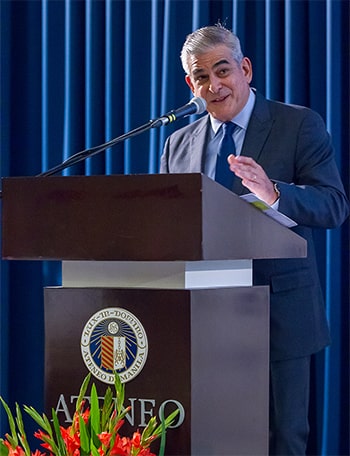


JAZA’s Acceptance Speech on Being Awarded The Metrobank Professorial Chair for Public Service & Governance

JAZA's Acceptance Speech

Fr. Jet Villarin, President of the Ateneo de Manila University, and an old friend, thank you for leading the way with your opening remarks. Dr. Tonette Palma-Angeles, Vice President of the Ateneo Professional Schools, another old friend, always a pleasure to be back at the Ateneo.

The Deans of the Ateneo Professional Schools, Dean Rudy Ang of the Ateneo School of Business, Dean Ronaldo Mendoza of the Ateneo School of Government, and Dean Manolet Dayrit of the Ateneo School of Medicine and Public Health, this year’s host for the Professorial Chair, Mr. Chito Sobrepeña, President of the Metrobank Foundation, thank you for your opening message – it was wonderful to hear about the great work you do at the foundation.

To the Executives of the Metrobank Group of Companies, the Metrobank Foundation, and the Manila Doctors Hospital, thank you for being here today.


I would also like to make special mention of Dr. Alran Bengzon, former secretary of health and founder of the Ateneo School of Medicine and Public Health, and with whom we share similar passions with, as well as Ted Ferrer, a long-time Ayala executive, but more importantly the founder of and our partner at Generika.


I am honored and humbled to be here today to receive the Metrobank Foundation Professorial Chair Award for Public Service & Governance. I would like to thank especially, Dean Manolet Dayrit, and the Ateneo School of Medicine and Public Health, who, as this year’s hosts, have graciously chosen us for our work in healthcare. As many of you may know, healthcare is fairly new to the Ayala Group, and so to receive this recognition early on, is, to us, a wonderful affirmation. I am delighted to be here today to speak about our approach to healthcare, and the innovations we are introducing to improve healthcare for more Filipinos. It still comes as a surprise to many that Ayala’s first venture into healthcare can be traced back to our earliest days, when, in 1834, Johann Andreas Zobel, set-up “La Drogueria y Botica de Zobel,”in Intramuros. The drugstore survived for over a hundred years, but eventually closed during the second World War.


Fast forward to 2015, we would eventually return to healthcare, and once again in the retail pharmacy space, with the establishment of AC Health, and its partnership with Generika Drugstore. Today, our portfolio includes a chain of clinics, called FamilyDOC, and various health technology solutions, such as an online pharmacy start-up called MedGrocer.


It is important to note that our return to healthcare was not by chance. It was a result of a deliberate exercise in innovation, something which we have embedded into our thinking at the Ayala Group. Allow me to begin by briefly touching on our view on innovation in the Ayala Group, since it is the same mindset that has shaped our approach to healthcare.

At the Ayala Group, we pride ourselves in having a long history of reinvention and disruption across the many industries we are present in. Innovation has been key to our success and longevity as a business.
We see potential in new businesses and industries, continuously reinventing our portfolio to remain relevant to the changing times. But beyond just portfolio building, we have made a concerted effort to invest in businesses that improve people’s lives. Our goal is to make businesses better by filling in existing gaps or serving unmet needs. Ultimately, we have a fundamental belief in the concept of shared value – that businesses have a unique role in social development, and that shared value can only truly be achieved when one builds social impact into the very fabric of one’s businesses.


To us, that is the most powerful type of innovation – building businesses that address social needs and improve lives. This is what we call “Inclusive Innovation.”


Let me share three examples from across the Ayala Group to illustrate our approach to this kind of innovation, starting with our experience in Manila Water.


Few of you might still recall the terrible water situation we had in Metro Manila back in the 1990’s. The water crisis was even more pronounced in low-income communities. Back then, people would queue in long lines twice a day to buy their water in pails, at 40 pesos per cubic meter, or a total cost of up to 1,500 pesos per month.


In response, Manila Water pioneered what we called the Tubig Para sa Barangay program, an innovative approach of working with low-income communities to ensure that they could have proper access to affordable water. The program introduced flexible financing options, socialized tariff schemes, and more importantly, engaged community members as partners in the program.


Today, participants in our program enjoy clean and potable water from their own homes with significant cost-savings, paying only 9.47 pesos per cubic meter, which is an average of only 165 pesos per month. More importantly, we have achieved 100% collection efficiency in the program’s communities, water-borne diseases in their areas have been reduced, and the overall sanitation conditions have greatly improved.


Let me share with you an example of this innovation mindset in our education business. A few years ago, we were looking at the educational sector and noted the massive dropout rates across all educational levels. I was astonished with the numbers: out of those who enter Grade 1, only 29% get to enter college, with only 21% eventually graduating. Among these graduates, only 9% are considered employable.


To address these critical gaps, our team brainstormed on various possible ideas, one of which was the concept behind APEC Schools. APEC Schools, which stands for “Affordable Private Education Centers,” aim to address the lack of access to quality, affordable education, particularly in the high school level.


APEC’s learning modules focus on enhancing employability, and cultivating life skills. The modules build industry-specific knowledge, but also focus on IT proficiency, business communication skills, and critical thinking, to name a few. Very importantly, it also provides its students with valuable soft skills and work habits, such as self-confidence, grit, and persistence. Today, APEC has over 16,000 students across 23 sites in Mega-Manila.

As a final example, let me share with you our experience with Mynt, our fintech joint venture with Globe and Ant Financial. The Philippines remains largely unbanked. We still live in a society where 70% of Filipinos do not have a bank account. In fact, 1 out of 3 LGUs is considered unbanked.


But with mobile penetration at 117% and a population that was very adept with mobile technology, we saw an opportunity to provide mobile payment and lending solutions to unbanked and underserved Filipinos.
Mynt’s GCash is a micropayment service that transforms a mobile phone into a virtual wallet, which can be used to buy prepaid load, pay bills, send money, and shop online. Its lending company, Fuse Lending, offers personal and business loans, using innovative credit scoring methods.


Mynt now has the biggest mobile money base in the country, with more than 3 million registered customers, 12,000 partner outlets and facilities, and ~₱1 billion in transaction value per week. And with Ant Financial now as our strategic partner, we see great potential in expanding these services to millions of Filipinos.


These are just some examples of how we have developed new ideas to address gaps and social needs. In a similar way, we view healthcare as an industry that is ripe for disruption and reinvention, with great potential for more inclusive innovation.


Globally, countries have struggled with how to provide better healthcare at lower costs, amidst evolving market demands. Healthcare systems around the world must grapple with shifts to an aging population, a growing number of chronic diseases, and greater demand for patient-centered care. The United Nations estimates that, between 2015-2030, there will be a 56% increase in the elderly population. In addition, disease profiles have shifted, from predominantly acute infectious diseases, to chronic lifestyle-related diseases. According to the World Health Organization, non-communicable diseases, such as hypertension and diabetes, account for 70% of all deaths globally. On top of these demographic shifts, consumer mindset is also changing – patients want to be more empowered about their health, and are demanding more convenience and accessibility.


In response to these trends, we now see a lot of disruptive innovation happening in healthcare globally. First, we are already seeing the emerging disruption of traditional business models in a major effort to bring down the cost of care and create better synergies. In 2017, CVS Pharmacy and Aetna announced a merger that would combine the largest pharmacy retailer in the US, with a leading health insurance provider, seeking to integrate pharmacy and financing capabilities, with direct further access to consumers. Meanwhile, just a month ago, Amazon, Berkshire Hathaway, and JP Morgan announced a partnership to set-up a healthcare company that would provide more cost-effective services for its workforce of over a million employees. The combined scale and expertise of these partners, hints at the potential to build technology-enabled solutions to address rising healthcare costs in the US.


Another area of disruptive innovation I foresee, will come with new technologies and discoveries in the field of gene sequencing and DNA testing. I am fascinated with how gene therapy has ushered in a new era of personalized medicine, where screening can identify genetic predispositions and treatment can be customized down to the molecular level. Last month, doctors at the University of Pennsylvania announced that they will soon begin human trials utilizing gene editing technology, called CRISPR, to treat certain cancers. The treatment will consist of editing DNA from a patient’s immune cells so that they are able to recognize and fight off cancer cells. The same technology can potentially be used to treat thousands of genetic diseases, many of which are incurable today. And while much is still unknown or controversial in the field of genetics, imagine the possibilities that this technology could unlock in the future, allowing us to battle, and win over, diseases we barely understand today.


In the Philippines, we also believe the healthcare system is ripe for disruption. Admittedly, we are grappling with our own healthcare issues as a country, but our issues are far more fundamental. Access to affordable, quality healthcare is a basic gap that unfortunately persists today. At the Ayala Group, we are cognizant of these gaps, and have made a commitment to invest in healthcare to help address these gaps.


Healthcare is important to us at the Ayala Group for several reasons. First, we recognize that healthcare is an integral part of the national agenda. We share the view that healthcare is not only a component for progress, but a fundamental right for all, as our good friend Dr. Alran Bengzon says. Second, as our economy improves, we see increasing demand and awareness of healthcare products and services, especially with the growing middle class. Third, and perhaps most compelling, is that across a Filipino patient’s life cycle, there is a clear need for improved healthcare. From birth to death, from cradle to grave, Filipinos struggle with poor health outcomes. The Department of Health estimates that on average, 60 infants die per day. A study conducted by The Economist, ranks the Philippines as the 78th out of 80 countries in terms of Quality of Death. It is evident that there is much room to improve the way healthcare is delivered today.


At AC Health, we believe we can improve healthcare by building an integrated healthcare ecosystem across the continuum of care, with retail health services at the forefront, creating affordable, last-mile access to millions of Filipinos. We envision over 1000 Generika pharmacies, 100 FamilyDOC clinics, and strategic partnerships with hospitals and specialty centers, tied together by innovative technology, to create a seamless experience and an integrated network. Most importantly, we keep our patients at the heart of everything that we do.


We believe the private sector plays an important role in improving healthcare, collaborating amongst each other, filling gaps, developing new innovations, and offering services that are complementary to what the public sector can provide.


Let me give you a few examples.


First, the private sector, with its access to capital and speed to market, can fill in the gaps in the industry and streamline processes. As an example, we are building FamilyDOC community clinics all around greater Metro Manila to help address the need for primary care. FamilyDoc clinics are a 3-in-1 retail model, consisting of a pharmacy, laboratory services, and primary care consultations. These services are offered at affordable price points, and more importantly, at convenient locations near residential communities. By the end of this year, we will have over 50 clinics, employing 120 primary care physicians, and over 200 allied health professionals.
With FamilyDOC, we hope to bridge the gap for affordable and quality primary care, specifically in middle-class communities where health facilities and medical professionals may not be easily accessible.


Meanwhile, Generika Drugstore, through its network of over 750 pharmacies nationwide, offers access to quality generic medicines, with up to 85% savings versus branded equivalents. I am astounded that our medicine at times still costs 30 times more than other countries.


I am proud to say that Generika was recently recognized by the ASEAN Business Awards as the first recipient of the new Inclusive Business Award. Generika bested 28 other companies from all over the ASEAN region, and was recognized for its inclusive business model, which pioneered the retail of quality generic medicines in the Philippines.


In continued partnership with our good friend Ted Ferrer and his family, we hope to deliver more affordable medicine to many more Filipinos, and promote the importance of over-all health and wellness more broadly.
Second, the private sector can encourage innovation and new technologies to deliver better healthcare. We have several examples of health technology at the Ayala Group. Through Globe’s KonsultaMD, users get 24/7 access to a licensed doctor through their mobile phones. In the pharmacy retail space, MedGrocer is creating a convenient channel through its online platform and delivery of medicine. AC Health has also developed its own in-house Electronic Medical Records and Clinical Information System, which allows us to utilize real-time data to improve efficiency and patient care at our FamilyDoc clinics. More importantly, it also enables us to perform extensive data analytics for population health, allowing us to monitor health outcomes, incidence rates, and disease trends at the community level. Apart from our Electronic Medical Records, FamilyDoc also utilizes tele-radiology, through a 3rd-party provider called LifeTrack. Through Lifetrack’s platform, clinics are able to digitally send x-ray and ultrasound images to Lifetrack’s pool of certified radiologists, who are then able to give an official reading in as little as 15 minutes. These health technology solutions not only improve efficiency and provide cost-savings, they also expand the reach of services, enable integration, and improve quality of care.


Before I end, I just wanted to reiterate an important point. The work that we do in healthcare is about improving lives. Ultimately, healthcare is about people. And while we are still in the very early stages of our healthcare business, I am encouraged with the many stories we have already begun to see, where you can really feel the impact one can have on our customers and patients.


Allow me to share with you a story from one of our patients, Lola Nina, an 86-year old senior from Taguig, where, thankfully, we have built one of our FamilyDOC primary care clinics. A few months ago, Lola Nina’s blood pressure shot up to dangerous levels, which could not be brought down by her usual medicines. Rather than going on an hour-long trip to her usual healthcare facility, she visited our FamilyDOC clinic, which was a few minutes from her home. She was assessed by our doctors, and her blood pressure was controlled with medication. But beyond simply controlling her symptoms, her doctor took the time to do a comprehensive assessment, which revealed an underlying Urinary Tract Infection as a trigger to her increased blood pressure.


I am proud to say Lola Nina is now well and comes in regularly for her blood pressure monitoring. She feels stronger, and is able to spend more time with family and friends, even going back to her weekly ballroom dancing, after five years of not doing so. She has also become one of our brand ambassadors, bringing in family, and fellow seniors to our clinics.


I like Lola Nina’s story, because, while it certainly illustrates the importance of quality accessible health care services, it also demonstrates the transformative effect that primary healthcare can have. Improving healthcare is not just about the body, medicine or disease – it is also about enabling people to live their lives better.


In closing, I would like to advocate for a collaborative approach between the public and private sector towards the common goal of improving healthcare for all.
For the private sector, we encourage more participation and partnerships among stakeholders to help fill in the gaps in the market, and to continue to invest in innovation, whether in the form of products, services or business models.


For the government and public sector, I would encourage regulatory frameworks that promote expansion of reach and services to many more Filipinos. In particular, we look forward to further improvements in government healthcare financing through PhilHealth, including packages to promote primary care benefits. I am delighted to learn that, as of 2016, PhilHealth now covers 91% of the population. With such a large member base, PhilHealth can serve as an excellent platform to improve financial accessibility. I believe we need to continue increasing awareness of benefits, so that more Filipinos understand, and avail of, the range of services that are now accessible through PhilHealth. We also encourage the creation of programs, funding, and incentives that can hopefully increase both the supply of medical professionals and healthcare facilities. Finally, we look forward to policy and regulation that can enable and encourage the development of new health technology services to reach a broader base of the population.


We believe the challenges of healthcare cannot be met by a single sector alone – we need the engagement of multiple stakeholders to ensure that we are protecting the fundamental right of all Filipinos to receive the healthcare they need and deserve.


I would like to take this opportunity to thank the Metrobank Foundation, and the Ateneo Professional Schools, for organizing this event, and for their commitment to ensure the continuity of the Professorial Chair though the years. I believe this can serve as an excellent vehicle to promote greater collaboration among the different groups present here today. Know that we, at Ayala, share your dedication to building a stronger culture of public service and good governance, not only in healthcare, but across the entire Ayala group.


Thank you, and a pleasant morning to all.

-Jaime Augusto Zobel de Ayala

 Chairman and CEO

 Ayala Corporation

View Gallery

AC Education Acquires National Teachers College

AC Education, Inc. (“AEI”), the wholly-owned education arm of Ayala Corporation, was selected as the winning bidder of the tender process conducted for the sale of shares of National Teachers College (“NTC”). A Share Purchase Agreement for approximately 96% of NTC’s shares has been executed by the parties. The acquisition remains subject to certain closing conditions, including securing the necessary regulatory approvals.


NTC is located on Nepomuceno Street, Quiapo, Manila and was founded in 1928, as the first school in the country to offer General Education leading to a Bachelor of Science in Education. It has a long track record of commitment to excellence in teaching, growth and inclusion, with almost 10,000 students from Basic to Higher education. It is one of the most well-recognized teacher education institutions in the country, with Level III Accreditation from PACUCOA for its Bachelor programs in Elementary and Secondary Education, and over 3,500 Education students in both college and graduate programs. NTC has also established growing Colleges of Accountancy & Business, Arts & Science, Hospitality Management and Information Technology, and a School of Advanced Studies.


Ayala Corporation started investing in the education sector in 2012 through AC Education, with a vision of delivering affordable and quality education that leverages an industry-based, experiential and technology-enabled approach, to significantly improve the employability of its high school and college graduates. AC Education’s Professional Employment Program (PEP) has significantly increased the employability and starting salaries of its college and senior high graduates.


In Basic Education, AEI has built the largest chain of stand-alone, private high schools in the country, APEC (“Affordable Private Education Center”) Schools, with approximately 16,000 students in 23 sites in Metro Manila, Cavite, Rizal and Batangas. In Higher Education, AC Education has invested in the University of Nueva Caceres (“UNC”) located in Naga City, with approximately 8,000 students. It is the oldest and one of the largest private schools in the Bicol region, offering college programs in Engineering and Architecture, Business and Accountancy, Education, Computer Studies, Law, Arts & Sciences, Criminology, Nursing and Graduate Studies. Together with NTC, the combined population of AC Education’s schools is approximately 34,000 students.


“We are very grateful that several groups had expressed their sincere interest in continuing the legacy of National Teachers College as established by our forebears. In selecting the buyer who shall acquire the shares of NTC, it was important to look not only at the capability to expand the school’s horizons, but also at the alignment of values and vision for raising our Filipino youth to be excellent teachers, industry leaders, or capable, competent individuals, in whatever path they may choose. We look forward to working with AC Education in this transition process and in moving NTC closer to becoming the world-class institution it was intended to be. We are honored to pass on the torch to AC Education, which we are confident will remain committed to building on the ideals upon which NTC was founded,” said Atty. Rolando De Castro, Chairman of the Board of The National Teachers College.


“The Ayala Group is committed to investing in the Education sector because we recognize that it is critical to building our nation. We believe that NTC can play an integral role in our efforts to contribute to a better education system in the Philippines, because of NTC’s long and successful track record in producing quality educators who go on to teach in both public and private schools,” said Mr. Jaime Augusto Zobel de Ayala, Chairman and CEO of Ayala Corporation.


“Our goal is to fulfill the vision of NTC’s founders of ‘…quality education for teacher preparation and development of manpower skills, anchored on the ideals of Excellence, Relevance, Access and Effectiveness, geared towards national productivity and world class competitiveness.’ We are committed to investing in further quality at NTC, and building on its traditions of excellence and inclusiveness,” said Mr. Alfredo I. Ayala, CEO of AC Education.


Mr. Ayala added, “We believe that NTC will be a key strategic element in the merger we have proposed between AC Education and iPeople.” Last month, AC Education and iPeople announced that they had executed a Non-Binding Term Sheet for their potential merger. iPeople is the listed education arm of House of Investments Inc., a member of the Yuchengco Group of Companies. Together with APEC Schools and UNC, NTC would be part of the assets that AC Education would contribute to its potential merger with iPeople, the parent of Mapua University, Malayan Colleges Laguna and Malayan Colleges Mindanao.

BPI Capital Corporation acted as the financial advisor of AC Education for the acquisition.

JAZA’s New Year Message to the Ayala Group

To expand access of reading JAZA’s New Year Message for Ayala group employees, we are publishing the material below.

Dear colleagues and friends,

Welcome to the start of 2018 and I hope you have all had the chance to get some rest in the company of family and friends. A big thank you, upfront, for working to ensure the continued growth and relevance of the Ayala group.

I write this note as part of a new tradition that I wanted to implement this year.  So many events happen in any given year and there is never much time to synthesize and bring some coherence and closure to all these thoughts.  Today is an attempt, on my part, to try to look back at the year that passed and identify some key themes in the hope of both bringing closure to my thoughts and setting some values based goals for the year ahead.  These thoughts will remain broad, macro focused and cover both global and national themes that are relevant to us.  Here goes.

As we reflect on the past twelve months, we see trends that persist – both social and economic – that affect many sectors of society.   We are increasingly globally interconnected and many of these themes cut across nation states.  I believe that it is important for us to take stock of these key trends, and understand how they shape and influence our path forward both as professionals and as stewards of our institutions.

Let me draw attention today to five themes that are the most relevant and that have had a disproportionate impact on our societies in 2017.

First, let me touch on the rise of populism which has been driven, to a large extent, by both perceived and real increasing social and economic inequity. Second, let me expand on the intertwined themes of globalization and technological advancement, two trends that have been at the center of public debate but whose effects have been, in my opinion, misunderstood.  Third, let me emphasize our need to continue to retool and upgrade our workforce in order to successfully navigate the employment challenges brought about by technological advancements and to remain relevant to the changing nature of our industries. Fourth, the need for infrastructure to support our many social and economic requirements remains of unprecedented importance.  Finally, let me highlight the indispensable role that the private sector plays in defining and executing on a more comprehensive economic social contract, where businesses build trust and relevance by being contributors to society and not just contributors to a more limited grouping of stakeholders.

VIEW MORE

Download: JAZA-New-Year-Message-to-the-Ayala-Group.pdf

Fostering CSR in the Philippines: Conference on Responsible Business

JAIME AUGUSTO ZOBEL DE AYALA
Fostering CSR in the Philippines: Conference on Responsible Business

Session 1: The Role of Businesses in Achieving the Philippines’ Goals for
Sustainable Development | Opening Statement
January 17, 2017

Good morning, and thank you for the kind invitation to be here today.

The past few years have seen questions raised around the role of business in inclusive growth and sustainable development. Brexit, the rise of populism, the election of unorthodox leaders around the world have all
been traced to a dissatisfaction with the status quo—with societies where progress has not benefited all, and lack of economic opportunity.

Businesses are now being asked to do more, to involve themselves more in combating developmental hurdles, and build a more all-encompassing relationship with society. Ignoring the challenges faced by both global and national communities today threatens our ability to create long-term value and jeopardizes both enterprises and the markets we serve.

On a personal note, the role of business in inclusive growth and society has always been in my thoughts. I remember completing my MBA and thinking that, while the knowledge I gained was valuable, it was not necessarily sufficient to help our country overcome the challenges it faced. In the Philippines, our need to address economic inclusivity and build on sustainable business practices remains of paramount importance. Allow
me to share with you some of our experience at the Ayala group.

The Ayala group has always aligned its business strategies with the country’s development agenda. Throughout our history, we entered critical sectors in dire need of private sector participation. In recent years, we have become much more aware of integrating societal challenges into the core of our business strategy. We reinvented some of our business models and created new ones to broaden our positive impact on the
communities where we operate and the country at large. Through our businesses, we do our best to engage society in a deeper and more meaningful way.

Most of our businesses traditionally catered to the higher end of the market. In recent years, we have expanded our products and services to reach a wider segment of the population. Ayala Land now offers affordable housing for as low as P500,000, while Globe Telecom provides affordable subscription plans for mobile and internet. Meanwhile, BPI has also made it a point to create customized loan products and provide financial guidance to the micro- and small entrepreneur segment. In addition, Manila Water delivers water supply as well as sewerage and sanitation services to more than 6 million customers in the eastern part of Metro Manila. It  as a flagship program called Tubig Para Sa Barangay, which is designed specifically for areas with clusters of low-income communities, including informal settlers.

Moreover, we entered the energy, infrastructure, health, education, and industrial technologies spaces. These are all sectors with critical gaps in quality and affordability, and are crucial in sustaining our country’s growth and development. Through AC Energy and AC Infrastructure, we are helping build our country’s much-needed physical infrastructure. Through AC Health and AC Education, we are able to provide affordable, quality services that supports human capital development.

Human capital development, particularly in skills training and education, is something we have identified to be absolutely necessary today, and it is an endeavor in which the private sector can contribute significantly. Businesses are in an excellent position to identify the disruptive impact on new technologies, as well as the new skills that will be necessary to adapt. We are already taking steps in this direction. Through APEC schools, AC Education uses a specially-designed curriculum to enhance the employability of students with skills needed in the job market. A number of other companies have their own initiatives to ensure the continued learning and development of their employees, keeping them up to industry standard—Globe University, IMI University, and Makati Development Corporation’s partnership with TESDA to upskill its construction workforce.

These are only a few examples of how Ayala is responding to the call of the times—how we remain progressive contributors to the changes needed in the world, and how we are evolving to make sure that we do
our part in national development.

The United Nations Sustainable Development goals were instrumental as we made a deliberate shift in company strategy. We can all agree that the SDGs are the simplest, clearest articulation of the goals we all share: the eradication of poverty, and the flourishing of communities, industry, innovation, and the environment.

The SDGs provided our group with a framework through which we could shape our value creation process—clear outcomes by which we could frame our sustainability goals. Framing our value creation process along the SDGs allows us to align with global initiatives.

Given the diversity of the industries in which Ayala is present, our group of companies contributes to the SDGs in a wide variety of ways.

Social tensions around the world have put at the forefront of our considerations the paramount role that the private sector plays in providing decent livelihood and work. Apart from the millions in capital expenditures that Ayala invests into the domestic economy, the group also contributes to “decent work and economic growth,” through the jobs it generates. The Ayala group provided employment opportunities to over 124,000 individuals in 2016. Moreover, as of November 2017, Ayala Land’s construction arm, Makati Development Corporation, provided close to 70,000 jobs in the lower-income segment, particularly for skilled construction workers. MDC has also partnered with TESDA in response to the industry-wide shortage in skilled labor and provide employment opportunities for more individuals in the construction industry.

In terms of “sustainable cities and communities,” Ayala Land has distinguished itself through its sustainable estates in the country that consider disaster resilience, connectivity, eco-efficiency, and economic development. For “clean water and sanitation,” Manila Water delivers a clean, reliable supply of water, sewerage, and sanitation services to over six million customers.

To complement these efforts, Ayala adopted the Integrated Reporting framework. This allows us to hold ourselves to higher standards of transparency and accountability by discussing not only financial and operational highlights, but also our sustainability and inclusive development initiatives documented through the SDGs. The Ayala Corporation 2016 Integrated Report was the first Integrated Report published by a Filipino company.

Ensuring that our companies can contribute to societal growth, I believe, is both a moral and a practical imperative. This is not mere altruism; rather, it is a deliberate strategy. Businesses cannot survive in societies where
inequity thrives; in markets failing markets; and where the environment is socially and physically degraded. Tremendous value can be realized when we strive to build more inclusive businesses—not only can companies
harness innovation and creativity in going beyond traditional models, we also help to empower the markets that have sustained our businesses.

Thank you, and I look forward to a productive and meaningful discussion.

Download: JAZA – CSR Conference 2017 Opening Statement.pdf

Joint Press Statement by the House of Investments and Ayala Corporation Regarding the Proposed Merger of Their Education Groups

iPeople Logo
Ayala Corporation Logo
House of Investments Logo

iPeople, inc. (“iPeople”), the listed holding company for the education sector of House of Investments Inc., a member of the Yuchengco Group of Companies, and AC Education, Inc. (“AEI”), the wholly-owned education arm of Ayala Corporation, have executed a Non-Binding term sheet for their potential merger. Under the Non-Binding term sheet, the parties agreed to an exclusivity period to complete due diligence, and to finalize the terms and conditions of the proposed merger within the first quarter of 2018. All terms and conditions of the proposed merger, including the involvement of House of Investments and Ayala Corporation in the management of the surviving entity, iPeople, shall be presented for approval by the parties’ respective boards of directors and merging parties’ stockholders, and the transaction will be subject to the requisite regulatory approvals as well.

The potential merger would bring together the educational institutions of House of Investments and Ayala Corporation (iPeople and AEI respectively). The potential merger would include iPeople and its significant subsidiary, Malayan Education System, Inc. (Operating under the name of Mapua University), a leading private engineering and technical university in the country, a world ranked QS-3 star university and the school with the most CHED Centers of Excellence in Engineering, and its subsidiaries, Malayan Colleges Laguna, the best board exam performing private school in Calabarzon, and Malayan Colleges Mindanao, and AEI and its subsidiaries, the University of Nueva Caceres, one of the oldest and largest universities in Bicol, and APEC Schools, the largest stand-alone chain of private high schools in the country. Together, the combined population would be over 40,000 students.

“We are looking forward to this potential merger. Mapua’s reputation as a leading private engineering and technical university in the country, together with AEI’s ability to provide quality education leading to enhanced employability, at an affordable price, would enable the Yuchengco Group of Companies and Ayala Corporation to jointly contribute to the improvement of the quality of education in the Philippines, for the benefit of all sectors of society,” said Mrs. Helen Y. Dee, Chairperson of House of Investments, Inc.

“We are very pleased about this opportunity to partner with the Yuchengco Group of Companies to help build our nation through education. Our belief is that the potential combination of iPeople and AEI would create significant synergies that would enable us to better equip students for compelling futures.” said Jaime Augusto Zobel de Ayala, Chairman and CEO of Ayala Corporation.

Contact Information

House of Investments, Inc.
Investor Relations Office
Ring F. Joven
Email: rfjoven@hoi.com.ph

iPeople Inc.
Investor Relations Office
Ring F. Joven
Email: rfjoven@hoi.com.ph

Ayala Corporation
Corporate Communications
Yla Patricia G. Alcantara
Email: alcantara.ypg@ayala.com.ph

PRESS STATEMENT ON BEHALF OF AC INFRA

Aboitiz InfraCapital, Inc., AC Infrastructure Holdings Corporation, Alliance Global Group, Inc., AEDC, Filinvest Development Corporation, JG Summit Holdings, Inc., and Metro Pacific Investments Corporation have all agreed to form a consortium to rehabilitate, operate, and maintain the Ninoy Aquino International Airport (NAIA) through an unsolicited proposal which it plans to submit to the Department of Transportation.

The consortium believes that the NAIA will continue to be a strategic gateway for our country and a key hub of airline operations for many more years. The consortium will work with foreign technical partners with proven world class track records and experiences in airport operations to improve, upgrade, and enhance the operational efficiencies of NAIA covering both landside and airside facilities.

Numerous foreign and local experts have highlighted the advantage of keeping an airport within city limits. Like other major cities in the world, experts recommend an in-city airport and another one outside the metropolis to complement it. Megacities that benefit from a two-airport set-up include Tokyo (Haneda and Narita) and London (Gatwick and Heathrow).

Given proper upgrades and strategic improvements, NAIA can easily accommodate an additional 11 million passengers annually from the current 39.5M passengers, and can increase its hourly aircraft movements (landing and take-off) from 40 movements per hour to 48 movements per hour.

The unsolicited proposal is intended to help accelerate the government’s “Build Build Build” program. Augmenting NAIA’s capacity is the quickest way to address airport congestion whileother airports are being developed outside Metro Manila. The consortium believes that this approach promotes greater economic benefit and sustainability for the whole country.

AC Infrastructure Holdings Corp. is the Ayala group’s wholly owned subsidiary that selectively pursues projects to support the growing infrastructure needs of the public and private sectors. 

For inquiries and additional information, please contact: 

JQ Quesada, AC Infra Corp Comm, Sustainability and Risk Manager
quesada.jam@ayalacorp.onmicrosoft.com
+63917810605

IFR Asia Names Ayala’s US$400M Fixed-for-Life Perpetual Bond as Deal of the Year in its 2017 Review

Thomson Reuters’ International Financing Review Asia (IFR Asia) named Ayala Corporation’s US$400-million fixed-for-life perpetual bond as the Philippine Capital Market Deal for 2017. IFR Asia is the leading source of fixed income, capital markets and investment banking news and commentary. In its special report, Review of The Year 2017, IFR Asia cited how the Ayala deal drew strong demand from both offshore investors and domestic institutions flush with dollar liquidity, managing to close multiple times oversubscribed with final orders of over US$2.5Bn.

IFR Asia’s citation lauded Ayala Corporation’s issuance of a US dollar-denominated perpetual bond in September that set a precedent in the Philippines for fixed-for-life bonds.  The report cited that Ayala’s first offshore issue since 2003 attracted heightened demand from investors looking for quality Philippine exposure and how Ayala was primed to respond, upsizing the issue and accelerating launch of the deal in the middle of its investor roadshow.  The Ayala bond was the first ever Asean corporate fixed for life perpetual.

Aside from allocating the proceeds to refinance the issuer’s maturing US dollar obligations and to fund investments, the deal also enables Ayala to pursue new opportunities, expansions and acquisitions in the years to come. This is aligned with Ayala’s integration of its strategy and operations with its sustainability framework, as the group continues to expand its long-standing businesses in real estate, banking, water systems and telecommunications while diversifying into new sectors; particularly, industrials, infrastructure, energy, health and education, which are critical to the Philippines’ socio-economic progress.  

Ayala Corporation recognized by Asset’s Triple A Asian Awards 2017 for US$400M fixed-for-life bonds

Asset Publishing and Research Ltd, a Hong Kong-based integrated multi-media company serving an elite community of leading corporate and financial decision makers in Asia, awarded Ayala Corporation on November 30, 2017 as The Asset Triple A Country Awards 2017’s Best Corporate Bond in the Philippines for its US$400 million senior unsecured and guaranteed fixed-for-life perpetual Notes, which were issued last September. The award was included in its Best Deals in Southeast Asia category.

The Asset Awards are Asia’s preeminent recognition for those that have excelled in their respective industries. With close to 20 years of experience, the awards programs are built upon a stringent methodology that is combined with a rigorous approach in selecting the best institutions and individuals operating in Asia.

The issuance, a US dollar-denominated fixed-for-life senior perpetual issuance at an aggregate principal amount of US$400 million with an annual coupon of 5.125% for life with no step-up in Southeast Asia and the first fixed-for-life with no step-up (and reset) deal in the Philippines, was commended by The Asset for “setting a precedent in the country for the fixed-for-life bonds”. HSBC was sole was sole global coordinator, with Deutsche Bank, HSBC and JP Morgan as joint lead managers and BPI Capital Corporation and China Bank as domestic lead managers.

The offering was more than five times oversubscribed, with investors’ confidence reflecting the high quality of the Ayala signature. “This successful launch of fixed-for-life Notes provides us with the financial flexibility to manage our balance sheet and diversify our sources of capital. We are grateful for the continued support we have received from investors that is clearly reflected in this issuance,” said Ayala Corporation Chairman and CEO Jaime Augusto Zobel de Ayala.

Now on its 19th year, The Asset’s annual Triple A recognition represents the industry’s most prestigious awards for banking, finance, treasury and the capital markets.

Limcaoco is ING-FINEX CFO of the Year

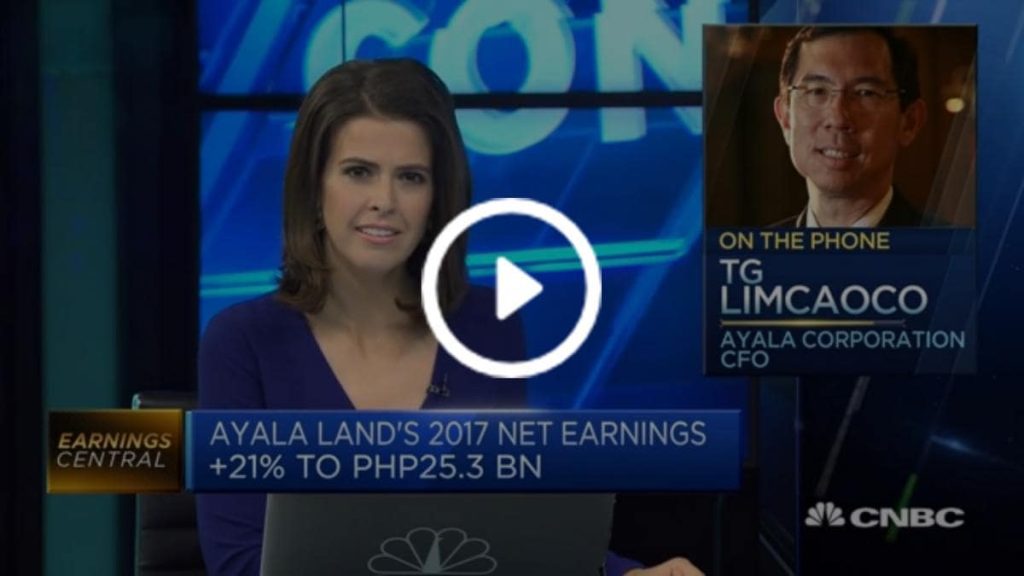
The Financial Executives Institute of the Philippines and ING Bank NV have named Ayala Corporation Chief Finance Officer Jose Teodoro K. Limcaoco as this year’s CFO of the Year.

As CFO of Ayala, Limcaoco is tasked to manage P900 billion in assets of the Philippines’ oldest and largest conglomerate which has diverse interests in real estate, financial services, telecommunications, water infrastructure, electronics manufacturing, power generation, transport, automotive, healthcare, and education.

“TG plays a very important role in the growth of Ayala Corp. He has a wide lens in which he views things. Our conversations stretch beyond the financials and encompass what we want Ayala to become,” says Ayala Chairman and CEO Jaime Augusto Zobel de Ayala.

JAZA credits Limcaoco for remodeling the capital allocation process at the parent company. This year, Limcaoco spearheaded the issuance of a $400-million “fixed-for-life” perpetual bond offering to help fund the conglomerate’s long-term investments; it was the Philippines’ first international corporate issuance in 2017 and also signaled Ayala’s return to the offshore debt market after a long hiatus. Moreover, in his concurrent roles as Chief Risk Officer and Chief Sustainability Officer of Ayala, Limcaoco has heightened the parent company’s focus on risk management and the group’s alignment to the United Nations Sustainable Development Goals.

Accepting his award on November 20, Limcaoco said: “The role of the CFO is constantly changing, for finance is the lifeblood and tangible measure of corporate success. As corporations and businesses evolve to be more responsible to all their stakeholders, so, too, will the responsibility of a CFO evolve to address and ensure the long-term sustainability of his or her business. This is the challenge we all face and must prepare our successors to address.”

Limcaoco is the fifth Ayala group CFO to receive the organization’s highest distinction, previously won by Ayala Land’s Jaime Ysmael (2011), Manila Water’s Sherisa Nuesa (2008) and Luis Juan Oreta (2015), and Globe’s Delfin Gonzalez Jr. (2007), who was later appointed Ayala CFO.

Limcaoco-is-ING-FINEX-CFO-of-the-Year
Ayala Corporation Chief Finance Officer Jose Teodoro “TG” Limcaoco is honored as the 11th ING-FINEX CFO of the Year by (from left) ING Bank Country Manager Hans Sicat, FINEX President Benedicta Du-Baladad, Ayala Chairman and CEO Jaime Augusto Zobel de Ayala, Bangko Sentral ng Pilipinas Governor Nestor Espenilla Jr., Ayala President and COO Fernando Zobel de Ayala, Chairman of the Board of Judges Edmundo Soriano, former ING Bank Country Manager Consuelo Garcia, FINEX Liaison Director Cecilio Paul San Pedro, and Chair of the 2017 Awards Committee Judith Lopez

Find out more about ING-FINEX CFO of the Year, TG Limcaoco in this video:

AC Energy, Kennedy Renewable light up MSU Tawi-Tawi’s best and brightest

Ayala’s latest social venture brings the benefits of solar energy to one of the most far-flung islands of the Philippines

TAWI-TAWI – Far from commercial grids and power lines, the island of Tawi-Tawi sits at the southernmost part of the Philippines. In this remote province, only 30% of the population has access to electricity, which is predominantly sourced from diesel generators. Due to the unstable electric supply, the island experiences rolling blackouts that stunt progress and slow down the delivery of essential services, such as health and education. For the Mindanao State University (MSU) in Bongao, Tawi-Tawi—whose vision is to be a center of excellence in Fisheries, Marine and Maritime Science and Engineering, and Oceanography— this means that the quality of their educational program is undermined and that the productivity of their students is often disrupted.


AC-Energy-Kennedy-Renewable-light-up-MSU-Tawi-Tawis-best-and-brightest

Working with MSU, AC Energy has partnered with Kennedy Renewable + Technology Corp. to address the power shortage and provide the school with solar panels. AC Energy, whose recent focus in the development of renewable energy, provided technical and financial support, with Kennedy acting as the main developer and engineering, procurement, and construction (EPC) contractor for the project. Seven campus buildings were outfitted with solar panels, hybrid inverters and batteries, providing not only 141kW capacity to the university, but also energy storage capability. The system works in tandem with the local power supply, thereby reducing the impact of electrical disruptions and lowering the school’s cost of electricity. 


“The successful launch of this project highlights the reality of conglomerates successfully working with small companies that labor under challenging circumstances to promote sustainable development. This installation is a living, although modest, testament of how organizations like AC Energy and Kennedy Renewable + Technology Corp. solve real problems of power shortages that affect critical institutions in remote areas. Many more projects like this will help advance the cause of energy derived from sources that are replenished by nature,” said Dr. Philip Ella Juico, Chairman of Kennedy Renewable + Technology Corp.


AC-Energy-Kennedy-Renewable-light-up-MSU-Tawi-Tawis-best-and-brightest-2

This renewable source of power enhances MSU’s role, as the only university in the province, in providing quality education despite the inefficiencies in the current local power situation. In these far-flung areas, access to electricity is directly linked to access to education. As the island’s sole institution for higher education, MSU Tawi-Tawi is now closer to its goal of producing experts in fisheries and agriculture, which are key drivers of their local industry. AC Energy’s President & CEO, Eric T. Francia added “Our company sees great value in not only providing electricity to far-flung regions of our country, but also to critical institutions of growth like MSU. Partnering with Kennedy Renewable and MSU to stabilize their campus’ power supply directly impacts the quality of education that the school’s students will receive. We are excited about the possibilities energy can provide—especially to the education of our future generation.” 


###

AC Energy is one of the fastest growing businesses of Ayala Corporation with more than US$ 1 billion of invested and committed capital, with investments in renewable energy and conventional power.

AC Energy is positioned to exceed 2,000 MW of attributable generation capacity and scale up its renewable energy portfolio to over 1,000 MW by 2020.

AC Energy is expanding beyond the Philippines and expected to grow its presence in Indonesia and other Southeast Asian markets.  


For inquiries and more information, please contact:

Irene Maranan

Head – Corporate Marketing and Sustainability

AC Energy


Email :  maranan.is@acenergy.com.ph

Contact number:  0917.5298339 or 908.3373

Website:  www.acenergy.com.ph